
AI Solutions for Pharma. From Drug Discovery to Commercialization
We help pharmaceutical companies and life sciences organizations design, build, and scale AI solutions across drug discovery, R&D, clinical trials, market access, and commercial operations.







Trusted AI partner for Pharma Organizations Moving Beyond Pilots


years of AI experience in deploying advanced AI solutions

NPS – metric measured on a scale from -100 to +100

commercial AI projects delivered overall, including pharma

Why Pharma Teams Work with deepsense.ai
AI solutions for pharma need to move beyond isolated pilots and into regulated, production-ready environments. We help pharmaceutical companies apply generative AI across drug discovery, clinical trials, market access, and commercialization — building systems that are reliable, auditable, integrated with enterprise workflows, and ready to scale.
Proven in Production with Leading AI Platforms
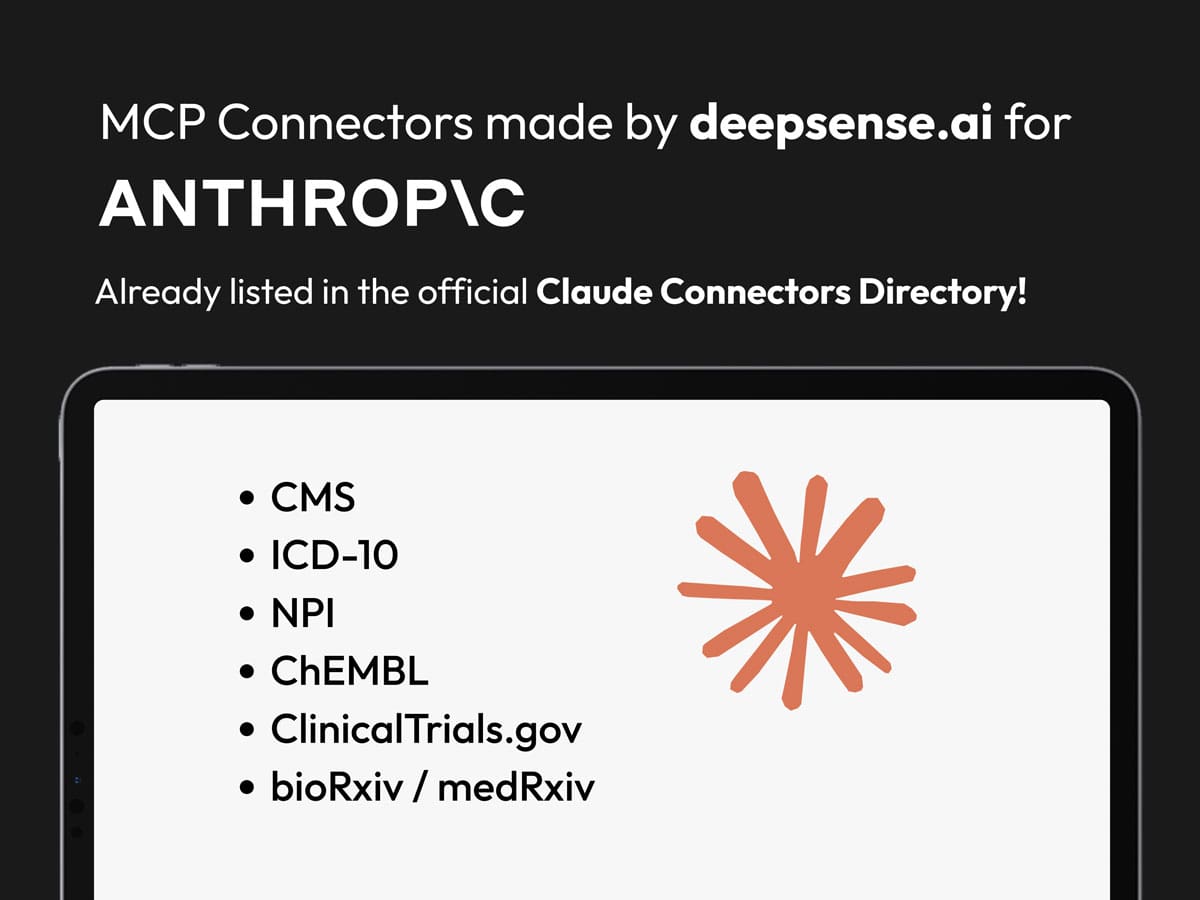
ANTHROPIC | deepsense.ai, as an Anthropic partner, has designed and run MCP connectors used in live Claude deployments across healthcare and life sciences, powering access to authoritative sources, listed in the official Claude Connectors Directory.
OpenAI | In parallel, we have delivered production connectors and AI integrations in collaboration with OpenAI teams, including enterprise deployments for enterprise organizations.
AI Across the Pharma Value Chain
We develop high-value AI solutions for pharma across the full therapy lifecycle – from AI for drug discovery and AI in clinical trials to AI for market access, AI for pharma commercialization, regulated AI systems, and AI copilots for pharma teams.

AI for Pharma R&D
Accelerate research workflows with AI for in-silico drug discovery, knowledge extraction, multimodal reasoning, and scientific evidence synthesis.
Our capabilities:
- In-silico drug discovery
- Target identification and validation
- Small molecule and biologics optimization
- Scientific due diligence and literature triage
- Scientific report, presentation, and chart generation
AI in Clinical Trials
Improve speed, recruitment quality, and operational efficiency across study design and execution.
Our capabilities:
- Protocol and study design support
- Site selection and patient enrolment
- Retention optimization
- Data management and biomarker workflows
- Safety and pharmacovigilance support

AI for Pharma Market Access
Support evidence-heavy, high-stakes decisions with AI that improves research, synthesis, and negotiation readiness.
Our capabilities:
- AI-supported evidence for MA dossiers
- Price negotiation copilots
- RWE compilation and analysis
- HTA dossier development support
- Managed entry agreement workflows
AI for Pharma Commercialization
Scale launch and field intelligence with AI systems that help teams move faster without sacrificing control.
Our capabilities:
- Product launch copilots
- Regionalized compliant content generation
- Medical affairs insights
- KOL/HCP engagement support
- Commercial excellence and reporting workflows
- Marketing solutions (mix, optimization, automation)

Selected Pharma AI Outcomes and Case Studies
-

case-study
From 3,000+ Medical Papers to Clinical Insight. Building an AI Assistant for Physicians
An AI-powered medical research assistant deployed across 13 countries helps 2 million physicians extract insights from 3,000+ high-quality medical sources spanning…
-
case-study
Automating Pharma-Compliant Content Creation with LLMs — From OCR to MLR-Ready Outputs
An end-to-end AI pipeline that transforms complex source documents into structured, high-fidelity, MLR-compliant promotional content, combining OCR, multimodal LLMs, and agent-based…
-

project
AI Copilot For Reimbursement Negotiations With Public Healthcare Authorities
Long-context processing enables the solution to synthesize extensive documentation into concise, relevant insights.
-

case-study
Guideline-Aware Protocol Generation: How LLMs Streamlined ENCePP-Aligned Study Design for Global R&D Teams
The solution enables faster, guideline-compliant protocol creation, boosting researcher productivity and accelerating time-to-market for new therapies.
-
project
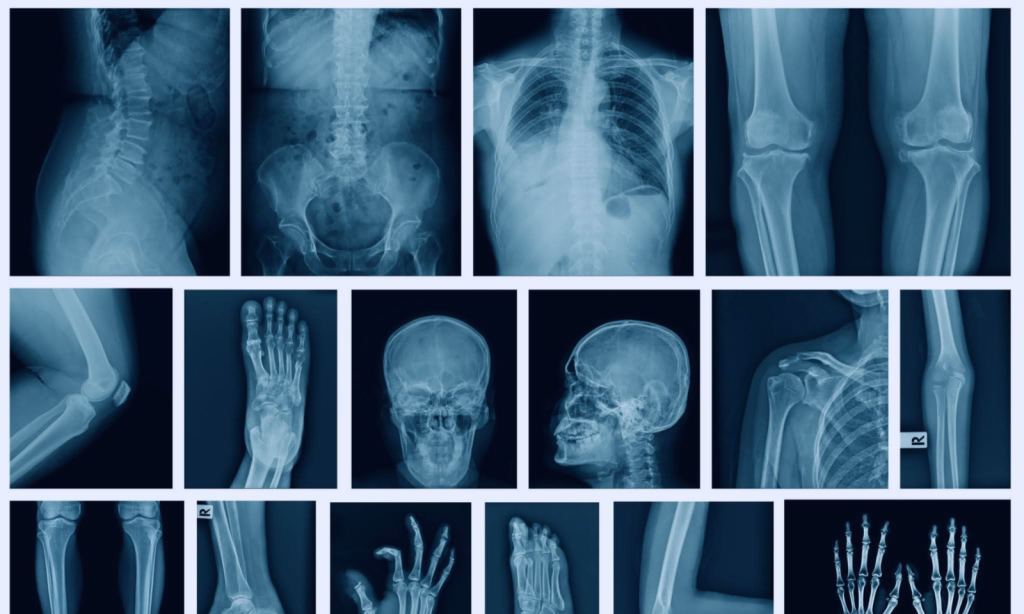
Revolutionizing Arthritis Trials with AI-Driven Imaging Biomarkers
The client needed a more accurate and automated solution to enable smaller, cost-efficient trials while maintaining regulatory confidence.
-

case-study
Rethink Site Selection. Our AI Model Beats Traditional Choices 90% of the Time
90% of model-recommended sites outperformed legacy solutions in the US market
-

case-study
5x Boost in In-Silico Drug Discovery with a Multimodal LLM
The new LLM allows the client’s research team to explore molecular properties and relationships more effectively.
-

case-study
100% More Bookings: How AI Transformed Appointment Scheduling
The AI voicebot transformed an unstable product into a robust AI scheduling voicebot that responds 10x faster, uses 20x fewer tokens per…
-

project
91% Accurate Skin Analysis for Precision Beauty Solutions
The system achieved 91% accuracy, outperforming human evaluations, and enabled the automated selection of the most suitable cosmetics for various skin…
-

project
Accelerating AI Strategy and Product Development
In a 3-week project, we reviewed their machine learning practices, including MLOps, to boost efficiency.
-

project
AI-Enhanced Facial Analytics for Next-Gen Beauty Devices
Launched in March 2024, the product integrated our models, achieving key-point detection with an error margin of less than 20 pixels on ~2000×1200 pixel…
-
project
AI-Driven Predictive Maintenance for Medical Devices
Our AI solution enables the client to prevent up to 30% of device failures, ensuring smoother hospital operations and increasing the perceived value of their…
What Our Clients Say About Us

Mariusz Gralewski
CEO at DocPlanner

“We engaged deepsense.ai for an AI Advisory engagement with the aim of reviewing and enhancing our AI capabilities and practices. From the outset, the deepsense.ai team demonstrated exceptional technical proficiency. They quickly developed a thorough understanding of our business context and objectives, giving us confidence that they could be a trusted partner in achieving our aspiration at DocPlanner of becoming an AI leader in the healthcare sector. deepsense.ai was adept at identifying practical quick-win improvements in our AI operations, providing guidance for our long-term investment priorities in the AI domain and ensuring a thorough transfer of knowledge to our internal AI team throughout the engagement. Overall, our experience with deepsense.ai exceeded our high expectations. Their expertise and collaborative spirit are top-notch, and we highly recommend deepsense.ai as a valuable partner in the AI journey to any product-based technology business with high aspirations and robust technical rigor.”

Burkhard Boeckem
CTO at Hexagon AB
“deepsense.ai helps us discover new scenarios and optimise our products under various conditions. For example, in one of our projects we developed a 3D facial reconstruction device capable of detailed skin analysis. deepsense.ai contributed to the elements requiring artificial intelligence for it. The final implementation involved accurately identifying key points, correctly segmenting facial areas, and detecting wrinkle lines and their estimated severity. Our collaboration shows how to apply cutting-edge AI in niche markets and industries where we seek a competitive advantage. We share efforts in our innovative approach, which differentiates us from peers and startups, embodying our belief that it’s better to disrupt ourselves than to be disrupted by the competition. We look forward to continuing our collaboration with deepsense.ai in the future.”

Ned Taleb
Co-Founder & CEO at B-Yond

“We have successfully partnered with deepsense.ai on multiple R&D projects. The deepsense.ai team was able to effectively partner and work hand-in-hand with our development team, complementing our domain knowledge with deep expertise in AI/ML and predictive analytics. Their professionalism and proficiency in data science made them an ideal partner for us, so we wish to continue our collaboration in the future.”

Tom Bianculli
CTO at Zebra Technologies

“At Zebra Technologies, we’ve had the pleasure of collaborating with deepsense.ai across a variety of AI-related engagements. One particular example where deepsense.ai’s expertise really stood out was their involvement in the development of our GenAI-powered frontline worker digital assistant. The solution integrated a diverse set of data sources, providing assistance to frontline employees with relevant responses in their moment of need. While working with Zebra teams, deepsense.ai has consistently demonstrated a strong technical capability, coupled with a proactive approach, an unwavering commitment to quality and delivering what they promise. Their dedication to our success has made them an invaluable partner in our journey. We look forward to our continued partnership going forward.”

Brian S. Raymond
Founder & CEO at Unstructured

“At Unstructured, we have been delighted to partner with deepsense.ai, a collaboration that has significantly accelerated the development across our Product Roadmap. Specializing in the complex domain of unstructured ETL for RAG, deepsense.ai has matched our technical intensity and contributed across various functional areas.”

Bill Salak
CTO & SVP Operations at Brainly

“deepsense.ai has been a dependable and high-quality partner to Brainly’s AI research, development, and operations efforts over the past 3 years. deepsense.ai professionals work side-by-side with our in-house teams, contributing to the development of significant projects. Their commitment to both technical excellence and teamwork has been evident in everything from daily operations to our most complex challenges. Their team has integrated seamlessly with our in-house teams, bringing top-tier talent and a collaborative spirit that drives innovation. We are grateful for this partnership and confident in their professionalism and expertise. Brainly highly recommends deepsense.ai for anyone seeking a team that brings both skill and a true collaborative spirit to the table.”
How Clients Usually Start with Us

AI Discovery + Acceleration
Identify the highest-value use cases and turn validated opportunities into working capabilities.

Proof of Concept Project
Validate a specific AI functionality and test it with your users.

AI Advisory Project
Assess current AI practices, tools, and delivery readiness.

AI Team Augmentation
Add senior AI implementation capacity to internal teams.
Our Insights and Resources
Learn more about our solutions in LLM software development, RAG, AI agents, MLOps, Data Engineering, Computer Vision, Edge Solutions, Predictive Analytics, and more—all from both business and developer perspectives.
-
Webinar
Clinical Trial Protocol & Feasibility Intelligence Demo
-
Webinar
AI for Drug Discovery: Testing World Models on Molecular Data
-
Blog post
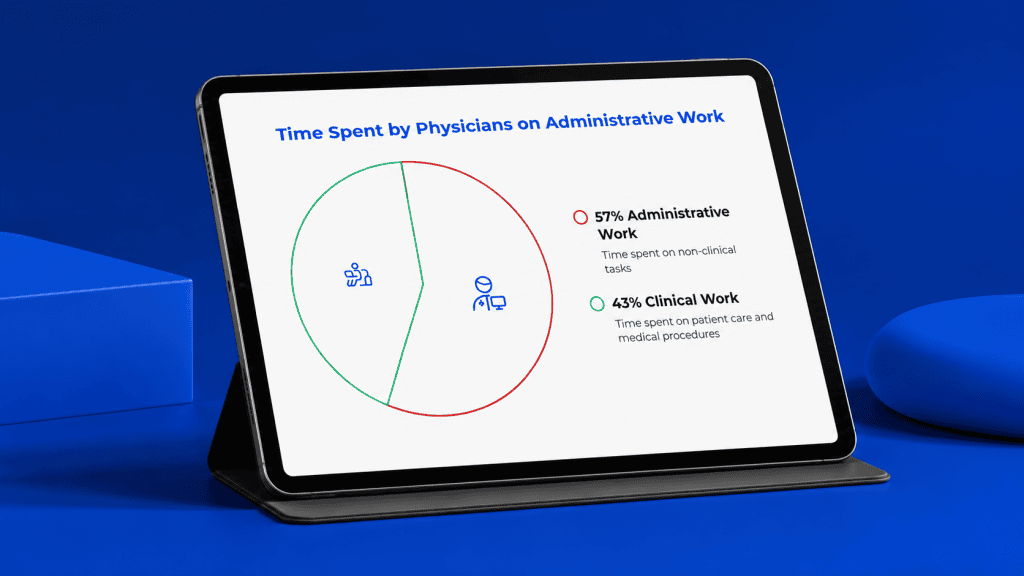
96.3% Physician-Accepted, Zero Hallucinations: Healthcare AI in Production
-

Blog post
GxP-Compliant AI Deployment. The New Competitive Edge in Life Sciences
-
Webinar
MCP Apps Explained: Building Agent-Driven UIs with Model Context Protocol
-

Blog post
Building MCPs for Regulated Industries: Lessons from Production AI in Life Sciences
Still have questions?
What are the best AI use cases in pharma?
The strongest AI use cases in pharma are those that reduce expert workload, improve decision quality, and integrate into regulated workflows. Based on deepsense.ai case studies, the most concrete opportunities are:
AI for drug discovery — multimodal models for in-silico drug discovery, molecular property prediction, chemistry-aware assistants, and experiment analysis. In one case, deepsense.ai integrated Llama 3.1 with Graphormer to help researchers analyze text, SMILES, and molecular graph data, achieving a 2–5x Graphormer training speedup and reducing overall training time by 50%.
AI in clinical trials — protocol design, site selection, patient enrollment forecasting, RWE/RWD analysis, diversity metrics, and trial planning dashboards. In a clinical trial site selection case, 90% of model-recommended sites outperformed legacy selections in the US market, with over 70 clinical managers using the dashboard across global planning teams.
AI for protocol design — LLM/RAG systems that generate guideline-aware study protocol drafts aligned with internal standards and ENCePP-style structure. One deepsense.ai solution reduced first-pass protocol drafting from months to weeks by combining LLMs with RAG over PubMed, Semantic Scholar, ClinicalTrials.gov, and internal databases.
AI for market access and reimbursement — copilots for drug pricing negotiations, reimbursement research, HTA-style evidence analysis, and competitor outcome synthesis. A deepsense.ai RAG-powered Pricing Copilot helped a pharma team analyze past cases, competitor outcomes, and complex drug data, significantly reducing preparation time for reimbursement negotiations.
AI for medical affairs and compliant content generation — automated literature review, evidence synthesis, MLR-ready promotional content, structured report generation, and validation workflows. In one pharma-compliant content case, deepsense.ai built an OCR + multimodal LLM + agent validation pipeline for MLR-ready outputs, achieving a completeness score of 0.87 and a hallucination detection score of 0.85.
How can AI improve clinical trials?
AI can improve clinical trials by making planning, protocol design, site selection, patient enrollment, and evidence generation more data-driven and repeatable. The biggest gains come when AI integrates real-world data, historical trial data, clinical registries, and internal operational data into decision-support workflows.
For site selection, deepsense.ai built a modular AI platform using RWD, clinical trial databases, external datasets, and internal data to recommend trial sites based on enrollment potential, diversity scores, and historical performance. The system included supervised ML models, automated evaluation pipelines, and a dashboard used by over 70 clinical decision-makers.
For protocol design, AI can shorten authoring cycles by generating structured, guideline-aware drafts that clinical and scientific teams can review and refine. deepsense.ai’s ENCePP-aligned protocol generation system produced complete protocol drafts across sections such as objectives, study design, population, data sources, outcomes, analysis, and ethics, while integrating evidence retrieval from PubMed, Semantic Scholar, ClinicalTrials.gov, and internal sources.
What does GxP-compliant AI mean in pharma?
GxP-compliant AI does not mean “the model is compliant” on its own. It means the AI system, workflow, data handling, validation evidence, monitoring, and human review process are designed for regulated use.
In practical terms, regulated AI for pharma should include:
- clearly defined intended use
- risk-based validation or computer software assurance
- audit trails and traceability
- data integrity controls
- access control and security
- documented evaluation results
- change management and versioning
- monitoring after deployment
- human-in-the-loop review where required
This aligns with FDA guidance on computer software assurance, which describes a risk-based approach to establishing confidence in automation used in production or quality systems and emphasizes objective evidence to support validation requirements. FDA data integrity guidance also defines an audit trail as a secure, computer-generated, time-stamped electronic record that allows reconstruction of record creation, modification, or deletion.
How do AI copilots support market access teams?
AI copilots support market access teams by helping them prepare faster for reimbursement, pricing, HTA, and negotiation workflows. Instead of manually searching through long documents, previous submissions, competitor outcomes, clinical evidence, and drug-specific data, teams can use a RAG-powered copilot to retrieve, summarize, compare, and synthesize relevant information.
A strong example is deepsense.ai’s AI Copilot for Drug Pricing Negotiations. The system was designed for a pharma leader preparing for reimbursement negotiations and used long-context processing with RAG to analyze extensive documentation, including past cases, competitor outcomes, and complex drug data. The result was faster preparation, better-informed decisions, and more effective negotiation support.
Can generative AI be used safely in regulated pharma environments?
Yes — but only when generative AI is implemented as a controlled system, not as an open-ended chatbot. Safe generative AI for pharma requires RAG, evaluation, auditability, access control, human review, monitoring, and deployment architecture aligned with regulatory and security requirements.
deepsense.ai’s pharma-compliant content generation case is a good example. The system combined Azure OCR, multimodal GPT-4.1, structured element-level processing, agent-based validation, and a custom evaluation framework to reduce hallucination risk and prepare content for MLR review. The architecture separated OCR processing from the review workflow, improved scalability, and supported auditable, regulated content production.
The EMA also frames AI in medicines regulation as a way to support research, process automation, better data insights, and decision support — while managing risk across the medicinal product lifecycle.