
Turn AI Ambition Into an Execution-Ready Program
We help teams decide where AI should create value, what it will take to deploy it, and how to move from opportunity to production. We combine business and product thinking with AI engineering to qualify high-value use cases and translate decisions into a roadmap.
AI Advisory Built for Execution
Our advisory work connects business priorities, workflow design, and production engineering. Every engagement is structured to produce clear decisions, reduce implementation risk, and give internal teams an executable path forward.
The Right AI Architecture, Backed by Leading Technology Partners
Our partnerships with leading AI models, cloud, and infrastructure providers help organizations validate technology choices, apply proven implementation patterns, and reduce the risk of moving AI into production.





From AI Readiness to Execution. AI Advisory Solutions
Whether you are selecting your first serious AI use case, moving a prototype into production, or scaling an established portfolio, we adapt the engagement to your current maturity and immediate decision. Our services are modular and can be combined where necessary.
AI Opportunity & Value Sprint
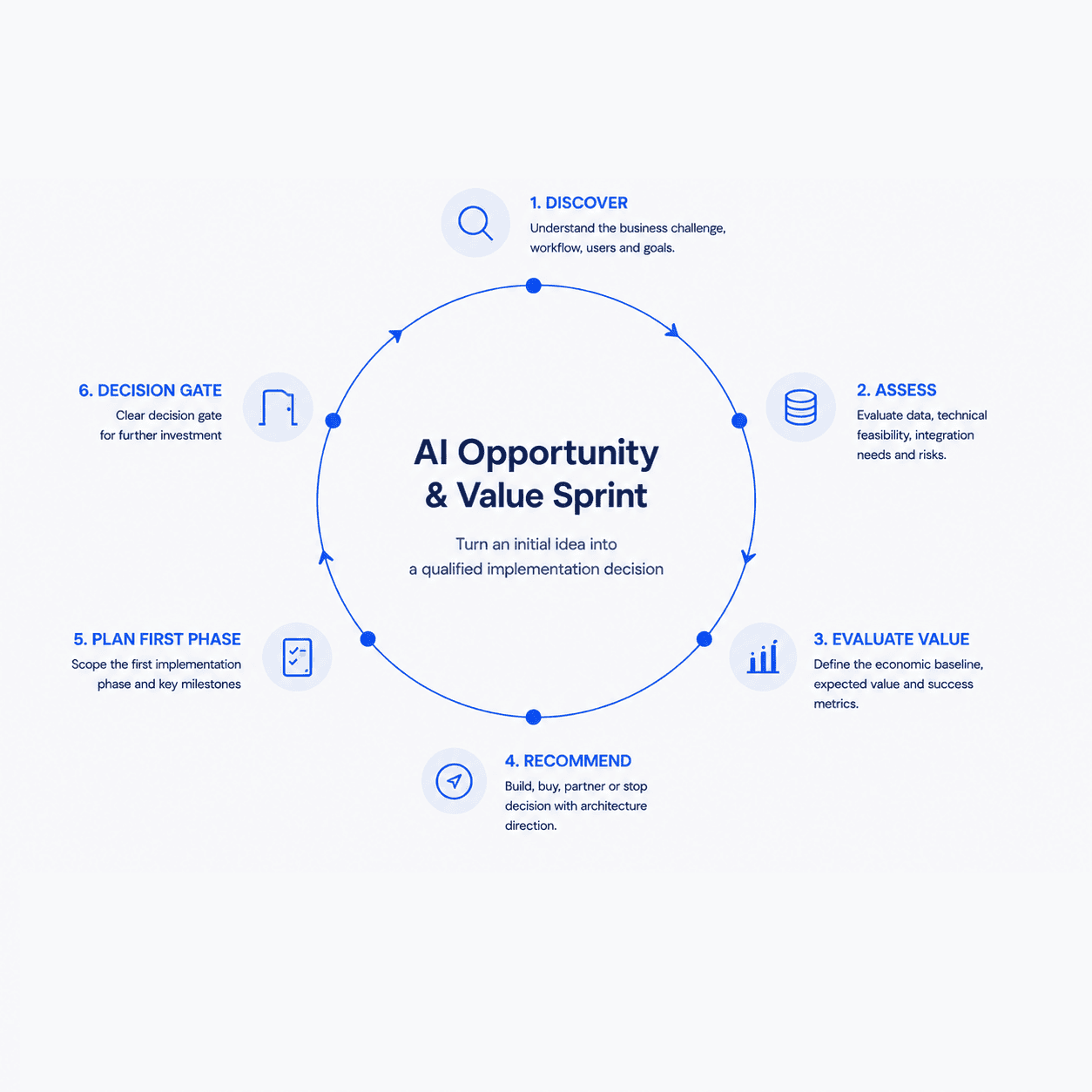
Turn an initial idea into a qualified implementation decision
Designed for organizations with a defined business challenge, a promising AI idea, or several opportunities that need to be narrowed down.
We examine the workflow, users, economic baseline, data, technical feasibility, integration requirements, operational risks, and ownership.
Typical outcomes
- clearly defined business problem and target workflow;
- qualified use case and target users;
- expected value and success metrics;
- feasibility, data and risk assessment;
- build, buy, partner or stop recommendation;
- initial architecture direction;
- scoped first implementation phase;
- clear decision gate for further investment.
Typical duration: 2–3 weeks
AI Adoption Blueprint
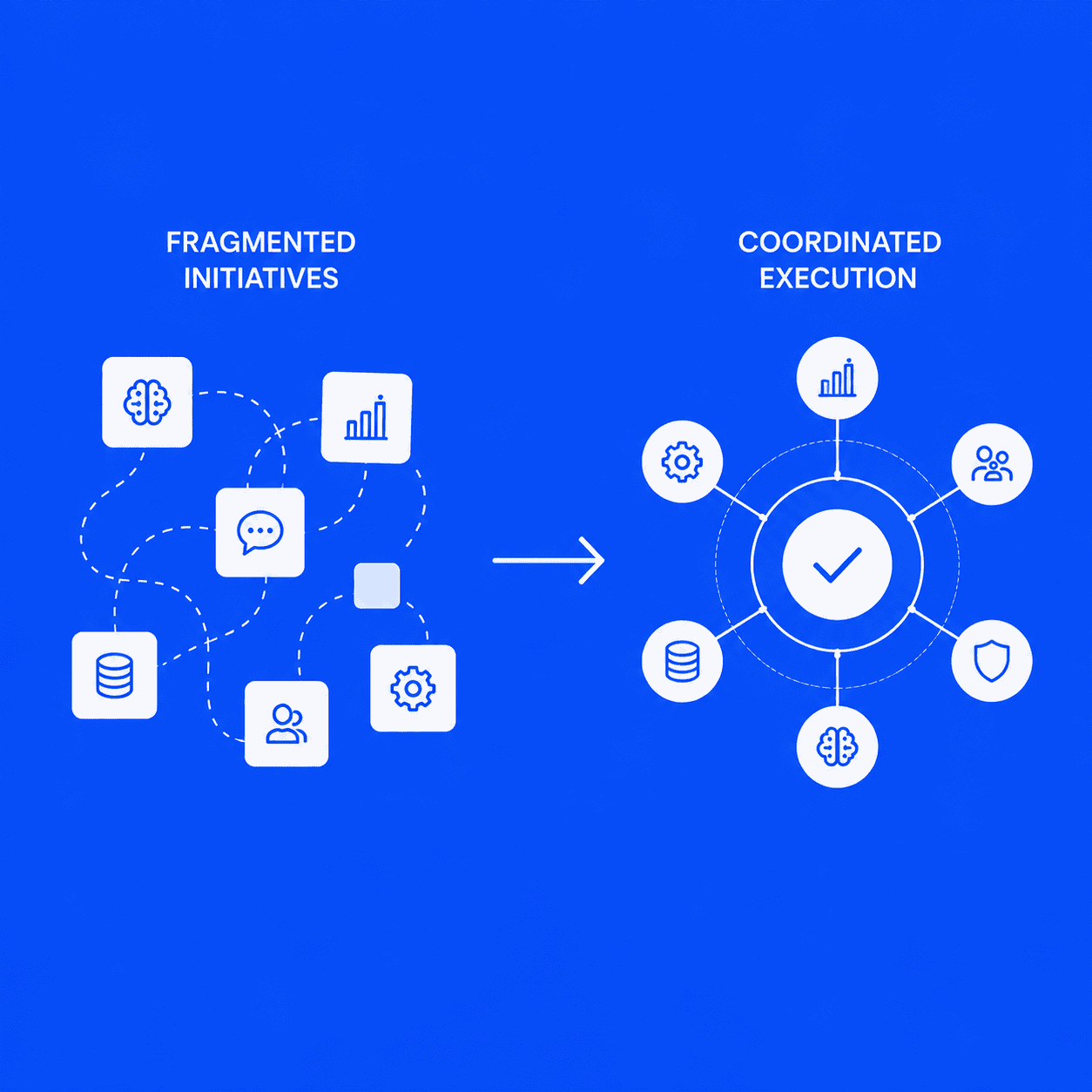
Create a coordinated path from fragmented initiatives to measurable execution
Designed for leadership-backed organizations that have multiple AI initiatives, business units, or product opportunities but lack a common direction and operating model.
We assess the current state across business priorities, AI initiatives, technology, data, talent, governance, and delivery capability. We then prioritize the opportunity portfolio and define a phased adoption plan.
Typical outcomes
- AI maturity and current-state assessment;
- capability and governance gap analysis;
- prioritized portfolio of internal and product use cases;
- business rationale and investment logic;
- target-state principles and architecture direction;
- ownership and decision model;
- 12–24 month adoption roadmap;
- focused 90-day execution plan;
- KPIs and portfolio-level success measures.
The result is an adoption blueprint designed to guide investment and implementation.
Typical duration: 4–8 weeks
Production Readiness & AI Systems Review
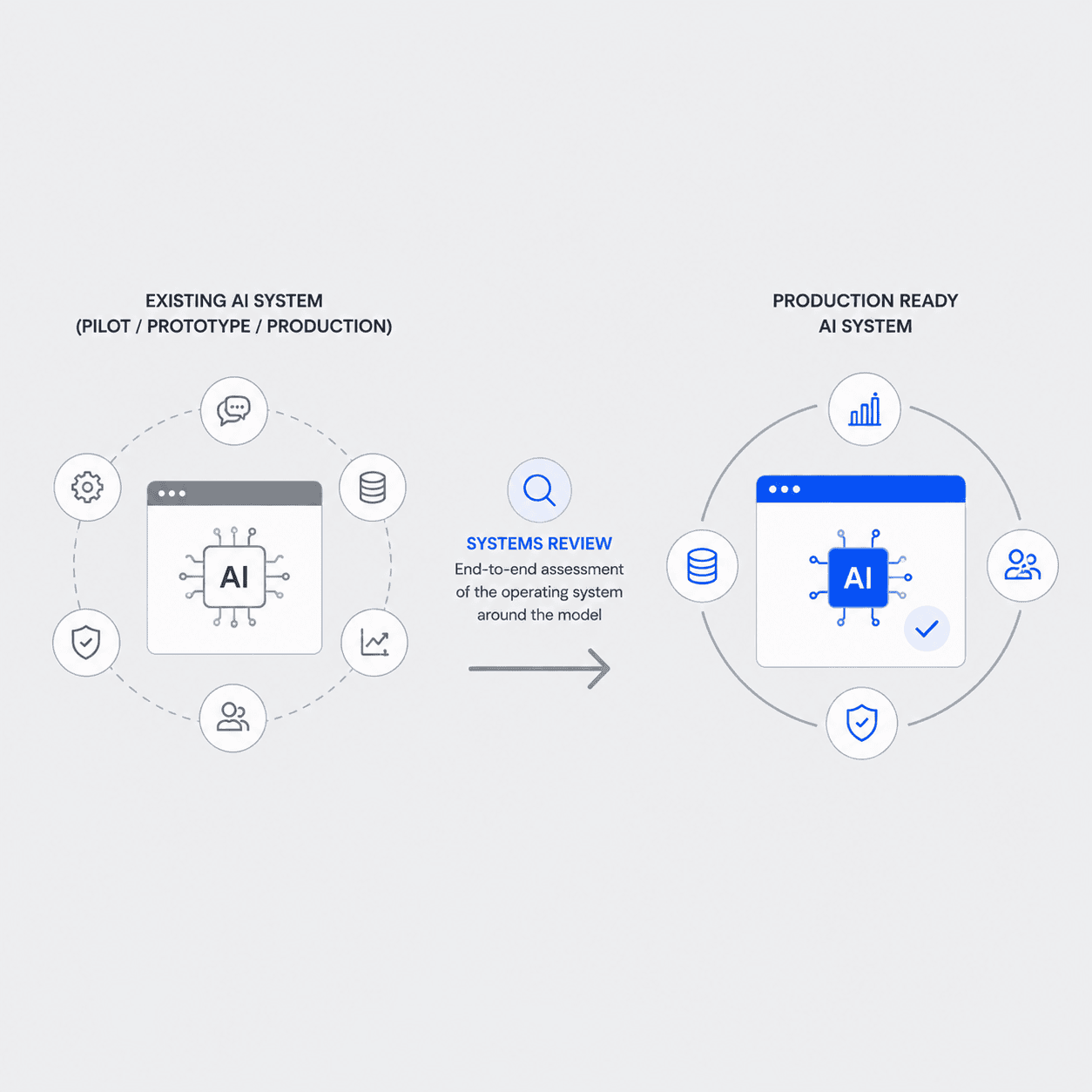
Determine what an existing AI system needs before it can scale
Designed for organizations that already have a prototype, pilot or production system and need an independent assessment before expanding its use.
We review the complete operating system around the model—not only prompts or model quality.
Assessment areas may include
- system and solution architecture;
- application and infrastructure implementation;
- agents, RAG, and retrieval quality;
- data pipelines and enterprise integrations;
- evaluation and regression testing;
- security, permissions and data protection;
- observability and incident handling;
- scalability, latency and reliability;
- token usage, infrastructure cost and operational efficiency;
- MLOps and LLMOps practices.
Typical outcomes
- production-readiness assessment;
- architectural and operational risk register;
- prioritized quick wins;
- target architecture and remediation roadmap;
- evaluation and monitoring requirements;
- production acceptance criteria;
- recommended implementation phases;
- knowledge transfer to the internal team.
Typical duration: 3–5 weeks
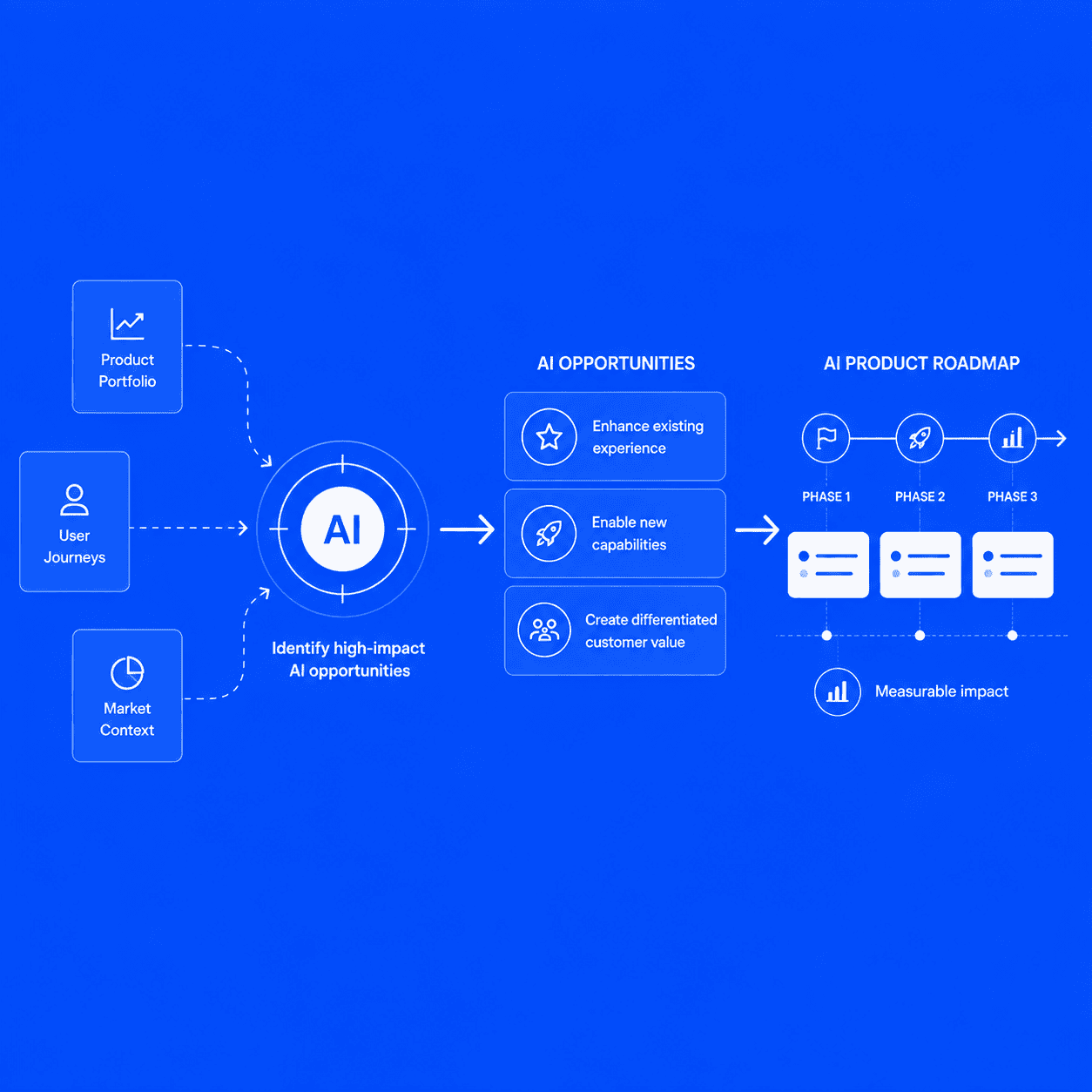
AI Product Opportunity & Roadmap
Define where AI can create differentiated customer value
Designed for software companies, product organizations and enterprise teams developing customer-facing AI capabilities.
We assess the product portfolio, user journeys and market context to identify where AI can improve an existing experience or enable a new product capability.
Typical outcomes
- prioritized AI product opportunity backlog;
- customer and workflow problems worth solving;
- differentiation and competitive assessment;
- build, buy or partner decisions;
- AI experience and human-interaction principles;
- feasibility and architecture direction;
- release sequencing and product roadmap;
- first implementation or validation scope;
- technical and product success criteria.
AI Strategy Implementation & Delivery
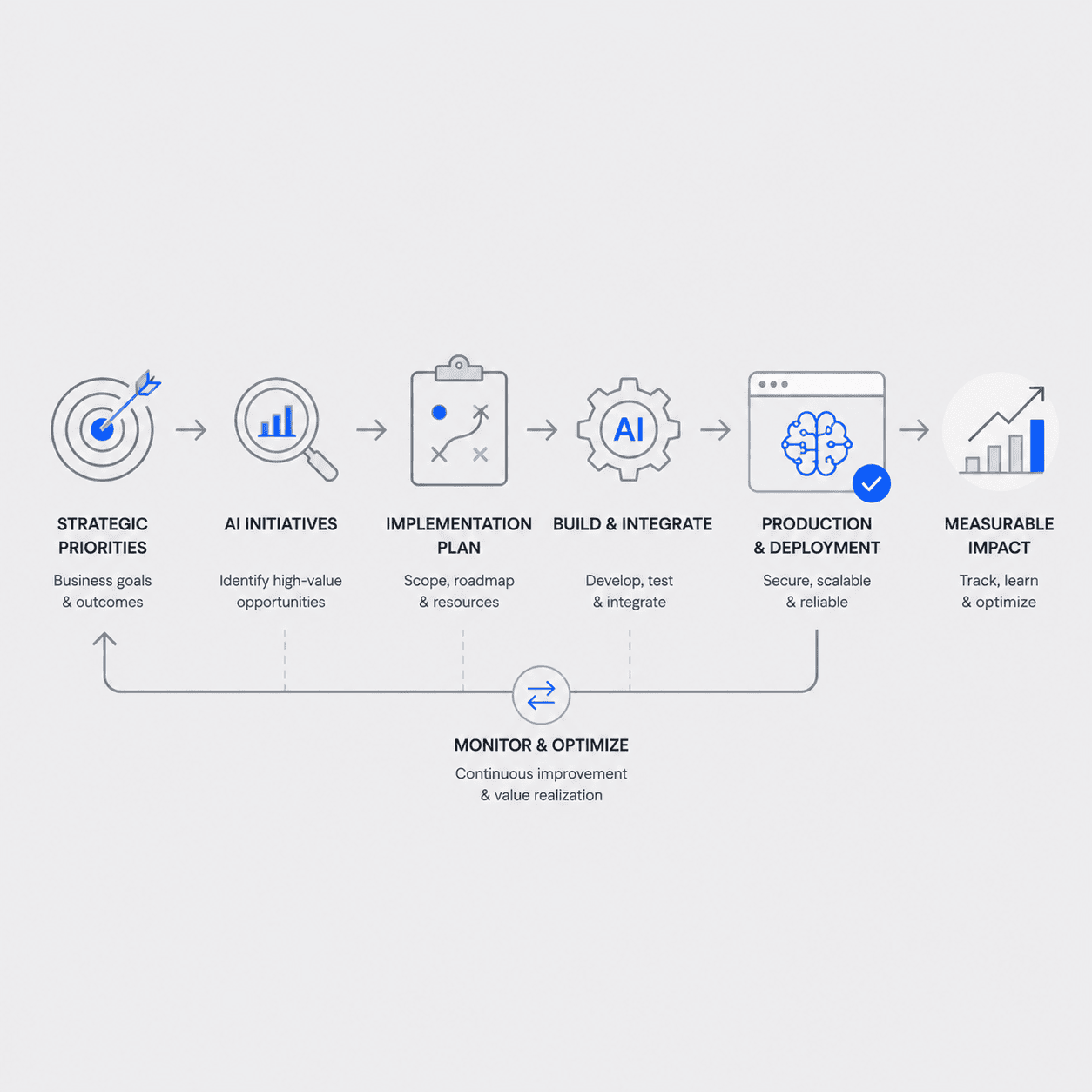
We help organizations translate existing strategic priorities into concrete initiatives, implementation plans, and production-ready AI systems.
The same team can continue from advisory into production
Examples:
- workflow and product design;
- solution architecture;
- engineering and enterprise integration;
- evaluation and quality controls;
- deployment and production operations;
- governance implementation;
- adoption and internal enablement;
- capability transfer.
This continuity reduces the gap between recommendations and what can actually be delivered.
AI Advisory Case Studies
case-study
From AI Agent Prototypes to a Scalable Enterprise Architecture for Supply Chain Operations
The client gained a clear architectural roadmap for moving from early AI agent prototypes to a cohesive enterprise-scale platform strategy. The engagement reduced…

project
SaaS AI Agent Platform: from AI Advisory to MVP Delivered in 3 Months
We delivered a 3-week AI advisory engagement covering platform audit, stakeholder alignment, customer validation, and AI agent architecture design.

project
Guiding AI Success in Infrastructure Monitoring
The project delivered a clearer AI strategy, improved prototype performance with measurable quality gains, and equipped the client with practical methods…

case-study
100% More Bookings: How AI Transformed Appointment Scheduling
The AI voicebot transformed an unstable product into a robust AI scheduling voicebot that responds 10x faster, uses 20x fewer tokens per…

project
Accelerating AI Strategy and Product Development
In a 3-week project, we reviewed their machine learning practices, including MLOps, to boost efficiency.

project
Exploring LLM Agents for Innovation with Tailored LLM Workshops
The workshop generated 6 actionable use cases, providing the R&D team with a solid understanding and enabling them to explore new AI…

project
LLM Workshop for a Global Corporation
The workshop offered business-focused sessions on LLM opportunities and technical deep dives for engineers.
Trusted by Leaders Responsible for AI in Production
“One particular example where deepsense.ai’s expertise really stood out was their involvement in the development of our GenAI-powered frontline worker digital assistant. The solution integrated a diverse set of data sources, providing assistance to frontline employees with relevant responses in their moment of need.”

Tom Bianculli

CTO at Zebra Technologies

“We engaged deepsense.ai for an AI Advisory engagement with the aim of reviewing and enhancing our AI capabilities and practices. deepsense.ai was adept at identifying practical quick-win improvements in our AI operations, providing guidance for our long-term investment priorities in the AI domain and ensuring a thorough transfer of knowledge to our internal AI team throughout the engagement.”

Mariusz Gralewski
CEO at DocPlanner

“deepsense.ai quickly delivered a Proof of Concept for a code completion tool, using a state-of-the-art technological stack, including the newest available LLMs and libraries. They also led an excellent LLM discovery workshop that jump-started AdaCore’s integration of LLM solutions into our business processes and products.”

M. Anthony Aiello
Head of Product & Innovation at AdaCore

“The deepsense.ai solution for anomaly detection helped expedite the problem detection times and decreased the number of monitoring failures. We were also impressed by their team’s technical know-how and solution-based mindset.”

Nitin Navare
CTO at LogicMonitor
Proven AI Delivery at Enterprise Scale
We combine AI engineering, product and workflow design, and production infrastructure to deliver systems organizations can deploy, operate and scale.


commercial AI projects
completed

world-class
AI experts

years
of AI expertise
Join our established list of long-term satisfied clients, including global brands, tech enterprises, ambitious scaleups and startups. Whether you’re rapidly scaling with AI or making it the core of your business, partner with us to achieve exceptional results.

























Why deepsense.ai for AI Advisory

Advisory Connected to Delivery
Recommendations are grounded in what can realistically be built, deployed, governed, and operated in production.

Business and Engineering in One Team
We combine business-value analysis, product thinking, and senior AI engineering to create executable plans.

Proven Production Experience
Our advisory draws on 200+ commercial AI projects and ten years of delivering AI systems in real enterprise environments.

Independent, Secure, and Capability-Focused
We evaluate platforms objectively, build evaluation and governance in from the start, and transfer knowledge to your internal teams.

Enterprise AI Adoption Insights
-

Blog post
AI Testing vs Software Testing: How to Build Reliable Production AI Systems
-
Blog post
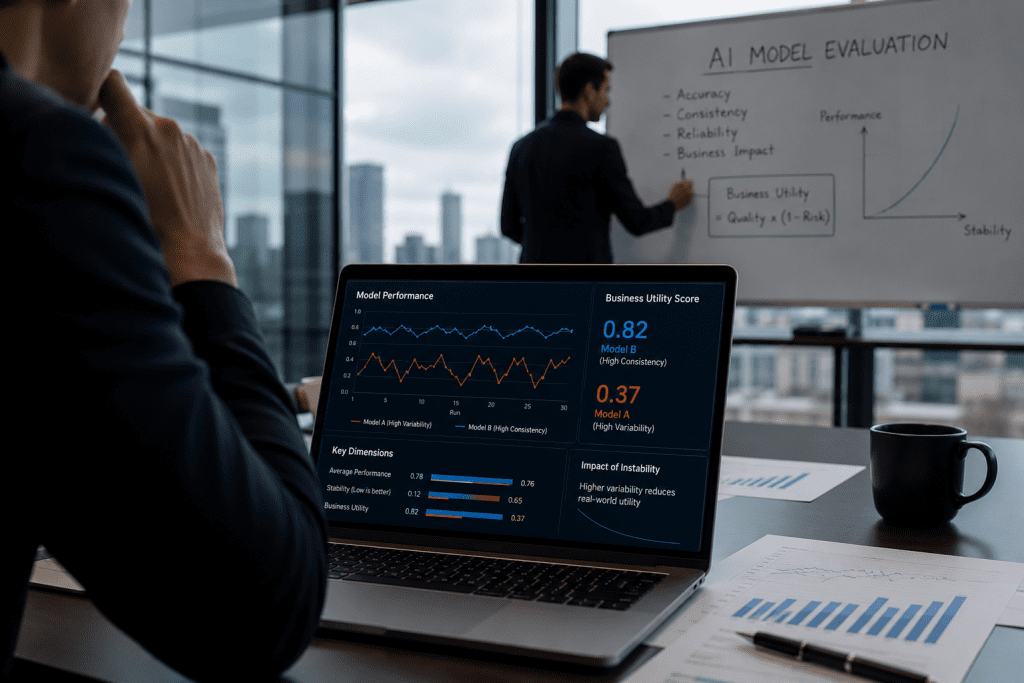
Why “Average” AI Isn’t Enough: Introducing a “Business Utility” Metric for AI Model Evaluation
-

Blog post
From Pilots to P&L: The 12 Factors That Determine Agentic AI ROI
-
Blog post
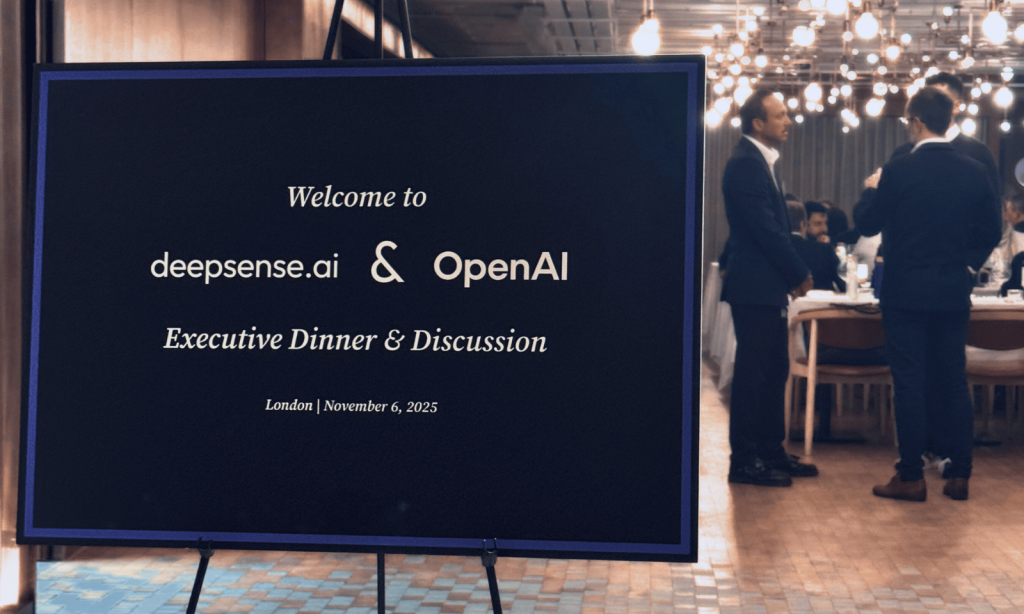
AI Advisory Perspective for 2026. What We Learned After the OpenAI Dinner
-
Blog post
Award-Winning Enterprise AI Advisory: deepsense.ai Recognized at European AI Awards
-
Blog post
Enterprise AI That Works: ChatGPT Enterprise for Productive, Secure, Scalable Teams
FAQ AI Advisory
What is AI Advisory & Adoption?
AI Advisory & Adoption helps organizations determine where AI can create value and define a practical path to execution.
It can include current-state assessment, use-case qualification, product discovery, architecture review, governance, evaluation planning, implementation roadmaps and the delivery of prioritized initiatives.
The objective is not simply to create an AI strategy. It is to improve the quality of investment decisions and make the selected initiatives executable.
How is this different from general AI strategy consulting?
deepsense.ai does not position itself as a general management consultancy developing broad transformation visions without technical validation.
We focus on the decisions and design required to execute:
- how the internal team will operate and scale the result.
- which use cases should be pursued;
- what the business and technical requirements are;
- what architecture and controls are needed;
- how implementation should be sequenced;
- how outcomes will be measured;
Who is this service for?
The service is designed for CIOs, CTOs, Heads of AI, AI Strategy Leads, Product and Engineering leaders, transformation owners and business executives accountable for AI outcomes.
It is particularly relevant when there is real leadership sponsorship, a business or product problem worth solving and a need to move beyond fragmented experimentation.
When should we begin with advisory rather than a PoC?
Begin with advisory when the main uncertainty is not whether a model can generate an answer, but:
- which use case deserves investment;
- who owns the result;
- how the workflow should change;
- what data and integrations are required;
- how quality will be evaluated;
- what risks must be controlled;
- how the solution will reach production.
A focused validation or implementation can begin immediately when the use case, owner, success criteria and production path are already sufficiently clear.
How do you prioritize AI use cases?
We evaluate use cases across several dimensions:
- business and operational value;
- workflow volume and repeatability;
- cost of the current state;
- data readiness;
- technical feasibility;
- integration complexity;
- quality and evaluation requirements;
- security and regulatory risk;
- ownership and adoption readiness;
- strategic fit.
The output is a ranked portfolio of opportunities with clear reasoning—not an unstructured list of ideas.
What deliverables will we receive?
Deliverables depend on the engagement, but may include:
- scoped implementation phase.
- current-state and maturity assessment;
- process and opportunity maps;
- prioritized use-case portfolio;
- business baseline and KPI framework;
- data and feasibility assessment;
- architecture and system review;
- target architecture;
- governance and evaluation recommendations;
- product opportunity backlog;
- AI product or adoption roadmap;
- production-readiness assessment;
- risk and remediation register;
- 90-day execution plan;
How long does an engagement take?
A focused opportunity or technical advisory engagement typically takes approximately two to five weeks.
A broader adoption blueprint or multi-stakeholder roadmap may take four to eight weeks, depending on organizational complexity, access to stakeholders and the number of initiatives being evaluated.
Can you work with an existing internal AI team?
Yes. The offer is designed to reuse existing systems and data investmenYes. Many of our clients already have AI, data, product and engineering teams.
We can provide independent validation, senior architecture expertise, evaluation and production-readiness support, or additional delivery capability where the internal team faces specialist gaps or capacity constraints.
Our preferred model is collaborative and includes structured knowledge transfer.
Do you support AI governance and regulatory readiness?
We help translate governance, security and regulatory expectations into practical implementation requirements.
This may include ownership, approval flows, model-risk classification, access controls, auditability, human oversight, evaluation, monitoring, documentation and incident processes.
For AI Act or sector-specific matters, we support technical and operating readiness but do not replace specialist legal advice.
How do you measure value and ROI?
We define the business baseline and success measures before recommending scale.
Depending on the use case, metrics may include:
- process time and throughput;
- cost per case or task;
- manual effort;
- quality and error rates;
- revenue or conversion impact;
- user adoption;
- customer or employee satisfaction;
- risk reduction;
- latency, reliability and model cost.
Business metrics are paired with technical acceptance criteria so the organization can determine whether the solution is ready for broader use.
Do you provide AI training?
We provide targeted technical and role-specific enablement when it supports a defined adoption or implementation program.
We do not focus on generic, one-off AI awareness or prompt-engineering workshops without a clear business objective and follow-on path.
Can the engagement lead directly into implementation?
Yes.
The advisory team can continue into product and workflow design, engineering, integration, evaluation, deployment, governance implementation and internal enablement.
This reduces the handoff risk between the team that defines the recommendation and the team responsible for delivering it.