The client gained a clear architectural roadmap for moving from early AI agent prototypes to a cohesive enterprise-scale platform strategy. The engagement reduced implementation uncertainty and helped align technical teams around a scalable approach to AI adoption in supply chain operations.
Meet our client

Client:

Industry:

Market:

Technology:
In a Nutshell
Client’s Challenge
The client’s supply chain organization had developed early AI agent prototypes to support multiple operational use cases, including triage and specialized workflow assistance. As the initiative expanded, the team needed to ensure these prototypes could evolve into a scalable, reusable enterprise framework rather than a collection of isolated agent implementations.
Our Solution
deepsense.ai delivered a 6-week AI Advisory engagement combining architecture review, technical advisory, strategic recommendations, and hands-on knowledge transfer. The work focused on assessing the existing AI agent architecture, identifying scalability risks, and defining a future-state roadmap for an enterprise-ready agentic AI platform.
The engagement included a prioritized advisory backlog, target architecture design, evaluation and observability guidance, technical demos, code examples, proofs of concept, and educational workshops for the broader supply chain organization. deepsense.ai also prepared an observability Architecture Decision Record (ADR) evaluating five platforms and provided guidance on modular agent extensions, context management, integration patterns, and scalable governance.
As part of deepsense.ai’s OpenAI Services Partnership, the team brought direct expertise in OpenAI’s agentic stack and helped the client translate that ecosystem into practical architectural decisions for enterprise supply chain use cases.
Client’s Benefits
The client gained a clear architectural roadmap for moving from early AI agent prototypes to a cohesive enterprise-scale platform strategy. The engagement reduced implementation uncertainty and helped align technical teams around a scalable approach to AI adoption in supply chain operations.
Key outcomes included a future-state architecture, prioritized implementation recommendations, an evaluation strategy, an observability framework, and stronger guidance for context management and application integration.
Following the advisory engagement, the recommendations were adopted into development planning, with follow-on engineering delivery discussions and a transition toward implementation. The solution has since been deployed in production and is used daily for hundreds of requests.
A Deep-dive
1. Overview
deepsense.ai supported a global leader in agricultural machinery and heavy equipment with a 6-week AI Advisory engagement focused on scaling an enterprise AI agent initiative for supply chain operations.
The client had already developed early prototypes, including a triage agent and several use case-specific agents. The next priority was to ensure that these initial implementations could evolve into a unified, reusable, and scalable framework for deploying AI agents across multiple supply chain use cases.
deepsense.ai’s role was to review the existing architecture, identify scalability and maintainability risks, and define a future-state architecture aligned with industry best practices. The engagement combined architecture audit, strategic roadmap creation, technical advisory, knowledge-sharing sessions, code examples, proofs of concept, and educational workshops.
The work helped the client move from individual agent prototypes toward a cohesive enterprise AI platform strategy, with stronger foundations for extensibility, evaluation, observability, governance, and future integration across the organization.
Performance Optimization Highlights
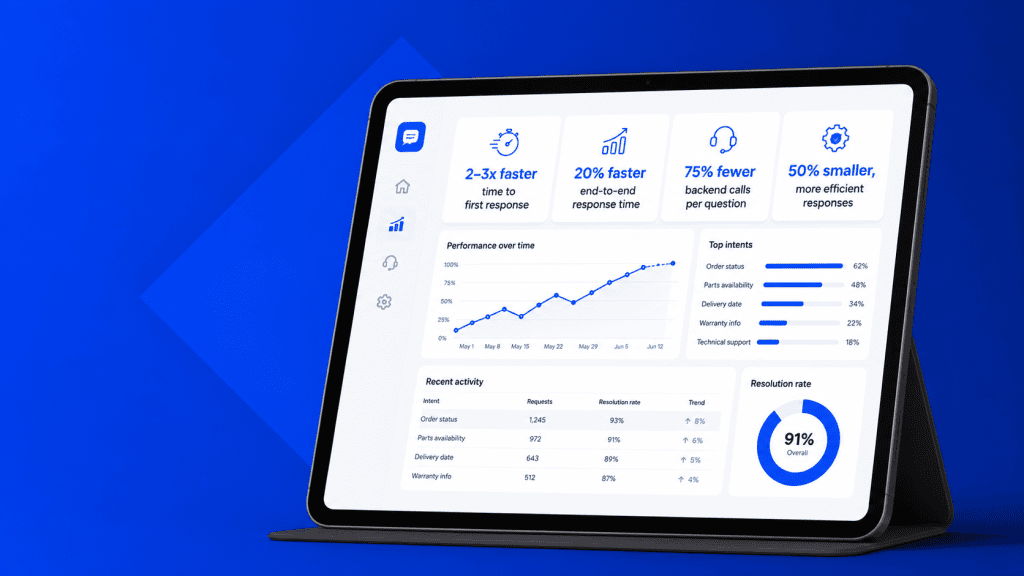
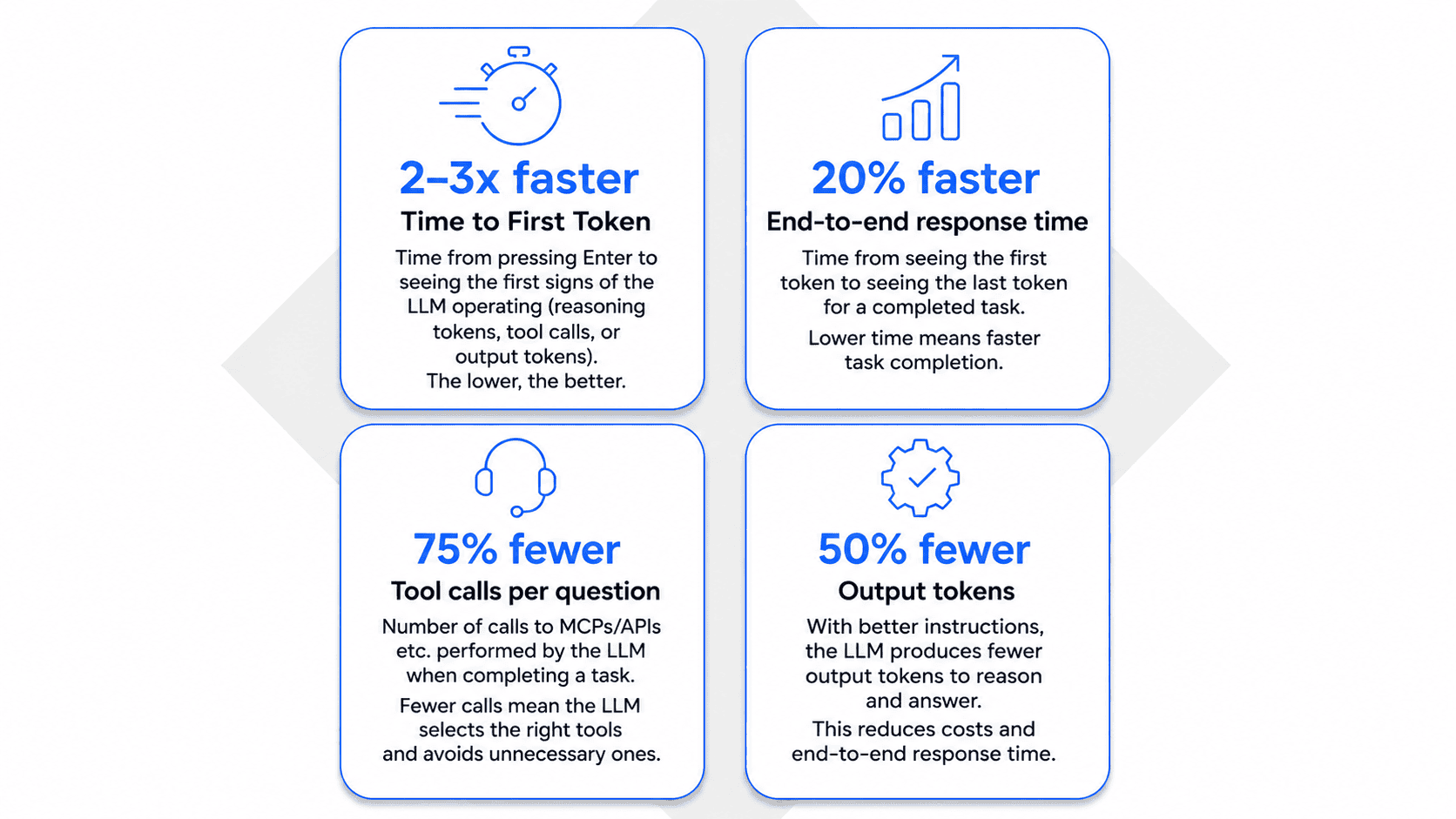
During the engagement, the AI agent platform delivered measurable gains in responsiveness, execution speed, and operational efficiency. The system became 2–3x faster in Time to First Token, allowing users to see the first signs of agent activity much sooner after submitting a request. End-to-end response time improved by 20%, reducing the time needed to complete full user tasks, from simple information requests to more complex workflows requiring data retrieval, analysis, and output generation. The platform also achieved 75% fewer tool calls per question, showing that the agent could perform tasks with fewer unnecessary system interactions. At the same time, output token volume was reduced by 50%, improving response efficiency and helping lower both latency and cost.
2. Client
The client is a global leader in agricultural machinery and heavy equipment, operating across industrial manufacturing, agriculture, construction, forestry, and supply chain management.
With more than 70,000 employees worldwide and annual net sales and revenues exceeding $40 billion, the organization operates at a scale where supply chain efficiency, consistency, and technology governance have direct enterprise-level importance. Its commercial footprint spans major global markets, with a significant share of revenues generated outside North America and equipment sold through distributor and dealer networks in more than 100 countries.
The client’s supply chain organization supports complex operational workflows across this global business. As part of its broader AI strategy, the organization launched an initiative to create a unified framework for AI agents that could support multiple supply chain use cases over time, rather than relying on separate, use case-specific implementations.
The main stakeholders included the AI initiative team, engineers, engineering managers, supply chain leaders, and future users of AI-powered workflows. The engagement was designed to support both the immediate technical team and the broader organization as it prepares for scaled AI adoption across supply chain operations.
3. Challenge
The client’s supply chain AI team had already built the first agent prototypes, but the architecture needed to be ready for broader enterprise use. As new agents, knowledge sources, capabilities, and integrations were added, the platform risked becoming difficult to maintain without a clear scalability strategy.
The challenge was not limited to building another agent. The client needed a reusable foundation that could support multiple supply chain workflows while maintaining consistency, flexibility, and governance.
Several technical dimensions had to be addressed early:
- agent scalability,
- context management,
- knowledge management,
- evaluation strategy,
- observability,
- UI integration patterns,
- and future extensibility.
The client wanted to validate its direction against proven architectural patterns before proceeding with engineering implementation.
4. Solution
deepsense.ai delivered a focused AI Advisory engagement that combined strategic guidance with deep technical architecture expertise on the OpenAI Agents SDK.
The team:
- reviewed the existing AI agent architecture,
- analyzed scalability bottlenecks,
- and created a prioritized backlog of recommendations.
The advisory covered the target-state architecture, evaluation approach, observability strategy, context management, modular agent extension patterns, and integration guidance.
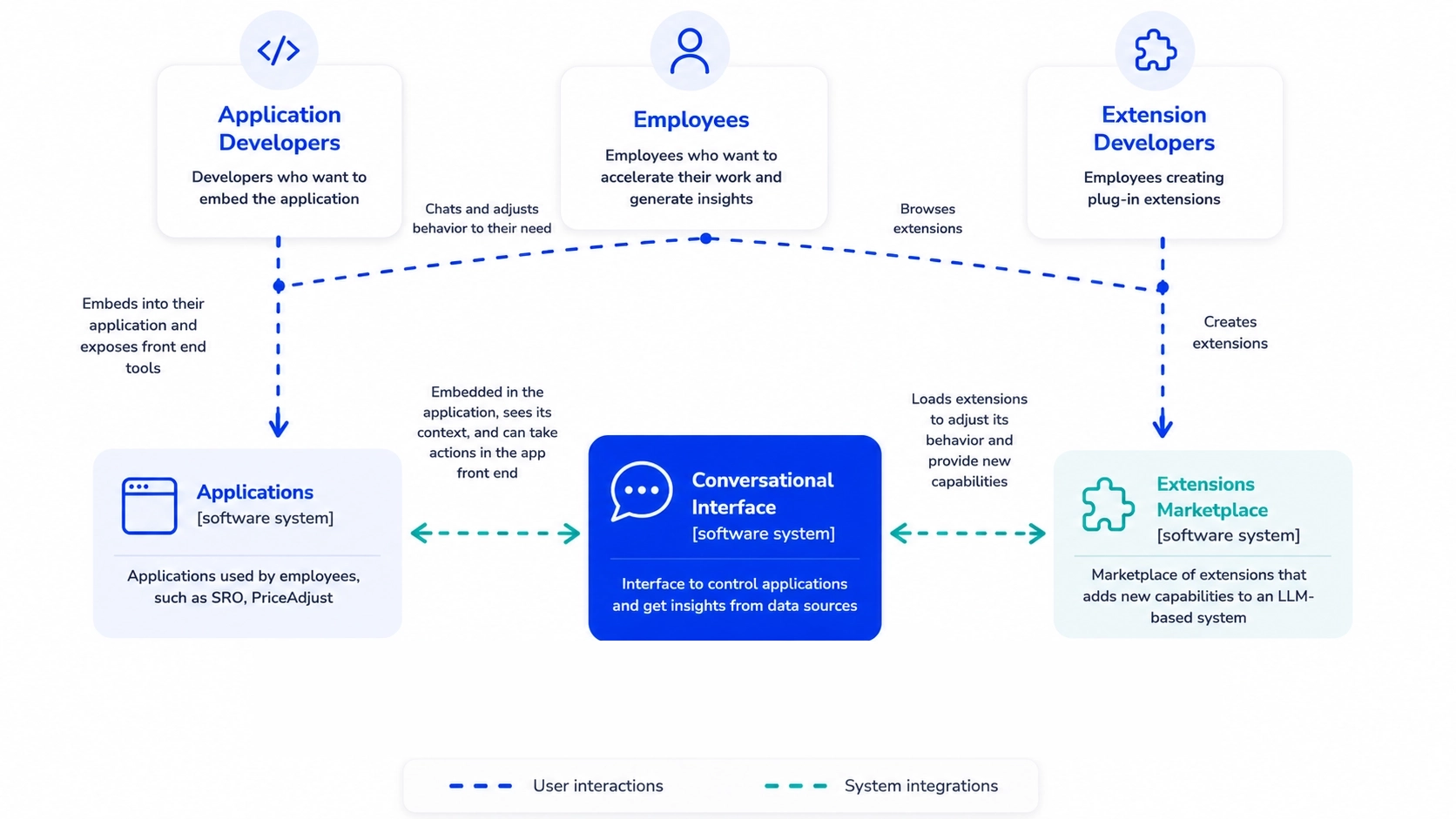
A key part of the solution was defining a more scalable architecture for an enterprise AI agent framework. Instead of treating each agent as a separate implementation, the recommended approach introduced a modular structure in which tools, skills, knowledge sources, personas, and integrations could be discovered and extended dynamically. This made it possible to expand the platform’s capabilities without redesigning the core system each time a new use case emerged.
The engagement also included:
- technical demonstrations,
- code examples,
- proofs of concept,
- and educational workshops.
These activities helped the client’s teams understand not only what architecture to adopt, but also why the recommended patterns mattered for long-term scalability, governance, and maintainability.
Performance Optimization Highlights
As the engagement continued into implementation and optimization, the platform achieved measurable performance improvements across key AI agent efficiency metrics.
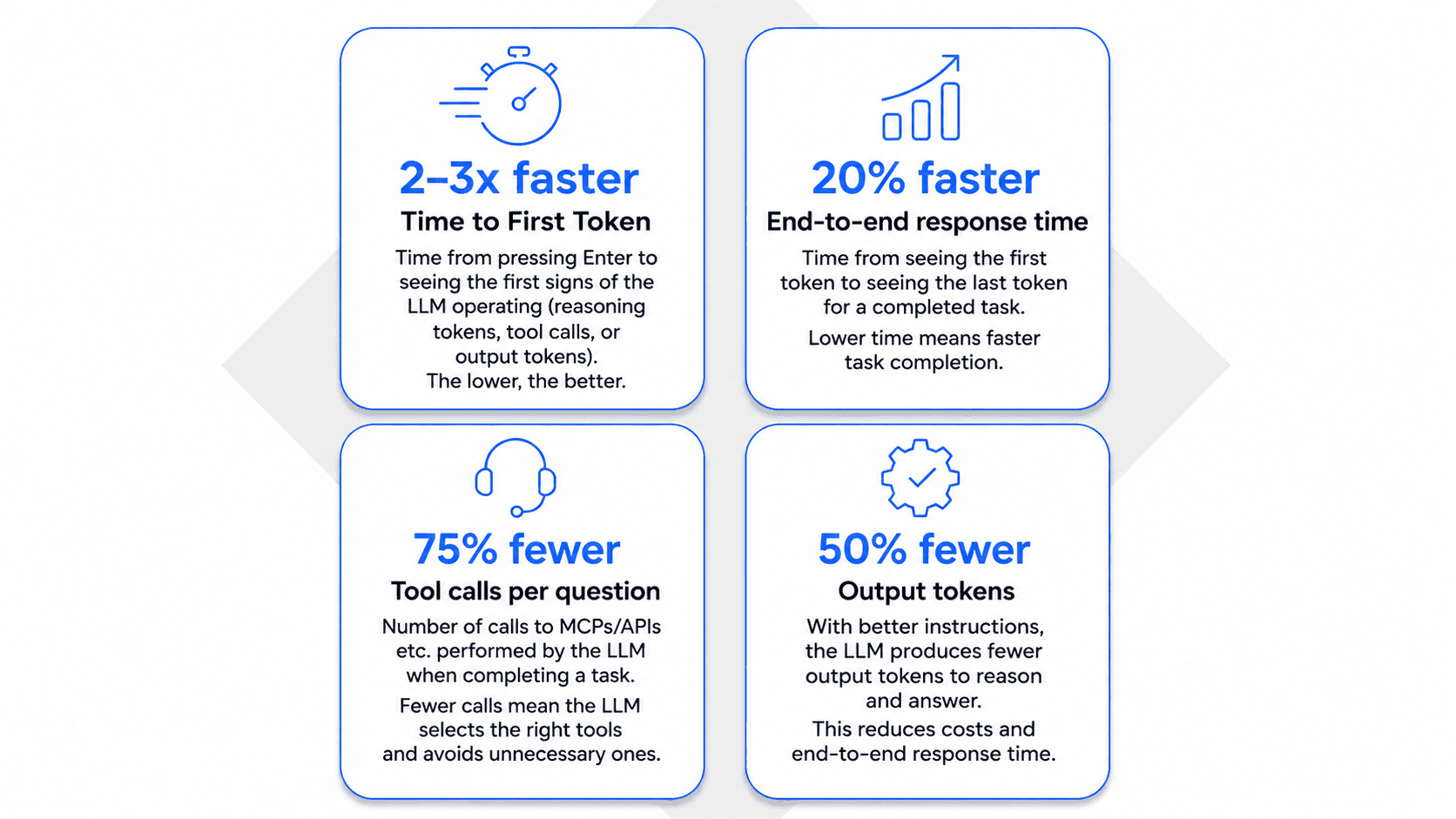
- Time to First Token — the time between a user submitting a request and seeing the first visible sign of the LLM operating, such as reasoning, tool calls, or output tokens — decreased by 2–3x, improving perceived responsiveness for users.
- End-to-end response time, measured from the first token to the final output for a completed task, improved by 20%, supporting faster execution of complex supply chain requests.
- The platform also reduced the number of tool calls per question by 75%, indicating that the agent could complete tasks with fewer unnecessary interactions with MCP, APIs, or the backend.
- In parallel, the number of output tokens decreased by 50%, making responses more efficient while helping reduce cost and overall response time.
OpenAI Services Partnership Context
The project and its ongoing continuation were delivered as part of deepsense.ai’s OpenAI Services Partnership. Before starting the engagement, the client already had an enterprise API agreement with OpenAI, which allowed the advisory work to focus on how OpenAI’s agentic stack could be applied effectively within an enterprise supply chain.
During the first phase, deepsense.ai demonstrated the benefits and implementation best practices of OpenAI’s Agents SDK through educational workshops for the broader supply chain organization. These sessions were followed by targeted code examples addressing specific technical challenges the client had encountered while developing its early AI agent prototypes.
As an OpenAI Services Partner, deepsense.ai also had early access to selected Agent SDK capabilities before their public release, which later informed the recommendations and solution design delivered. This combination of strategic advisory, hands-on technical guidance, and direct expertise in the OpenAI ecosystem helped the client validate OpenAI’s agentic stack as the preferred foundation for its platform, rather than building agents from scratch or adopting an alternative framework.
Core Components
The advisory engagement produced a target architecture and roadmap for evolving the client’s AI agent initiative into a scalable enterprise platform. This roadmap defined the desired future state, key architectural decisions, and the recommended path from early prototypes toward a more cohesive platform strategy.
A central component was the agent extension framework. It introduced a modular model for expanding agent capabilities through dynamically discoverable tools, skills, knowledge access patterns, and user-facing behaviors. This approach gave the client a clearer way to add new functionality over time without creating unnecessary complexity in the core architecture.
deepsense.ai also defined an evaluation framework that uses real user interactions and feedback as the basis for future improvements. This created a stronger foundation for measuring agent behavior, identifying quality gaps, and prioritizing enhancements.
The observability framework provided recommendations for tracing, monitoring, evaluation, and governance. As part of the engagement, deepsense.ai prepared an architecture decision record that evaluated five observability platforms, providing the client with a structured basis for selecting the right approach.
Additional components included a context management strategy for scalable knowledge access and retrieval, as well as an application integration layer based on event-driven communication principles. Together, these elements helped the client prepare the platform for broader use cases across the supply chain and future organizational expansion.
Team
The deepsense.ai team brought together AI architects, machine learning engineers, AI consultants, and technical advisors. Their role was to combine strategic AI advisory with practical experience in architecture and implementation.
On the client side, the engagement involved the AI initiative team, engineers, engineering managers, and stakeholders from the supply chain organization. Outcomes were reviewed collaboratively through working sessions, roadmap discussions, and technical knowledge-sharing activities.
The most important expertise included agentic AI architecture, scalable AI system design, evaluation, observability, context management, and enterprise readiness.
Process
The engagement began with discovery. deepsense.ai reviewed the client’s goals, existing architecture, technical assumptions, early prototypes, and future requirements. This helped identify the main risks and constraints that could affect scalability.
Next, the team created an advisory backlog. This document prioritized recommendations and provided the client with a clear view of what should be addressed first to improve architectural quality, reduce implementation risk, and prepare for future expansion.
Knowledge transfer was a major part of the process. deepsense.ai delivered multiple technical sessions covering critical topics, including agent scalability, evaluation, observability, integration patterns, and context management. These sessions were supported by technical demonstrations, code examples, and proofs of concept that made the recommendations more actionable.
The final stages focused on future-state architecture design and strategic planning. deepsense.ai prepared the target architecture, implementation recommendations, and roadmap guidance, which were reviewed collaboratively with the client’s team and aligned with the initiative’s long-term goals.
5. Outcome
The engagement gave the client a clear, technically grounded roadmap for evolving its AI agent initiative from early prototypes into a scalable enterprise platform based on OpenAI Agents SDK.
The work improved alignment across teams and reduced uncertainty around the platform’s future direction. It also strengthened the client’s understanding of agentic AI best practices, including how to design for scalability, evaluation, observability, context management, and long-term extensibility.
The project helped shift the initiative from a set of individual agent implementations toward a more cohesive enterprise-scale platform strategy.
Results
The advisory engagement was completed over 6 weeks and delivered several concrete outputs:
- an architecture roadmap,
- a prioritized implementation backlog,
- an observability ADR evaluating five platforms,
- multiple technical knowledge-sharing sessions,
- and three organization-wide workshops on agentic AI.
The work supported multiple supply chain use cases and helped prepare the client’s organization for broader AI adoption. Following the advisory phase, the recommendations were incorporated into development planning, and follow-on engineering delivery discussions took place.
The platform has since moved into production use.
Business Impact
The engagement established a stronger foundation for scaling AI across supply chain operations. By reviewing the architecture early and defining a clearer target state, deepsense.ai helped the client reduce the risks typically associated with expanding agentic systems, including technical debt, inconsistent agent behavior, limited maintainability, and fragmented implementation patterns.
The roadmap also supported the client’s long-term AI strategy. It gave technical and business stakeholders a shared view of how the platform could grow, how new use cases could be added, and how governance, observability, and evaluation should be embedded into the architecture.
Beyond the technical deliverables, the engagement helped build organizational readiness. Educational workshops and knowledge-sharing sessions gave broader teams a better understanding of agentic AI systems and the architectural discipline required to scale them responsibly.
Lessons Learned
One of the key technical lessons was that scalable agentic systems require dynamic discovery of both knowledge and capabilities. A static agent-by-agent design may work for early prototypes, but it becomes harder to maintain as new use cases, tools, data sources, and user needs emerge.
From a business perspective, the project reinforced the importance of addressing scalability early. When an AI initiative is expected to support enterprise workflows, architecture decisions made at the prototype stage can significantly influence future adoption, maintainability, and delivery speed.
The engagement also highlighted the importance of evaluation and observability from the beginning. Real user interactions and feedback should inform evaluation datasets, improvement priorities, and governance practices as the platform matures.
The client validated that a modular extension architecture offers a practical path for expanding both platform functionality and organizational adoption.
6. Summary
deepsense.ai helped a global industrial manufacturing leader establish a scalable architectural foundation for enterprise AI agents in supply chain operations.
The client had already built early agent prototypes and needed to ensure that the initiative could grow into a unified, maintainable, and reusable platform. deepsense.ai delivered a 6-week advisory engagement covering architecture review, strategic roadmap creation, evaluation, observability, context management, integration guidance, technical demonstrations, and educational workshops.
The engagement gave the client a clearer path from isolated agent implementations to an enterprise-scale AI platform strategy. It reduced architectural uncertainty, strengthened technical alignment, and created a foundation for scaling AI-powered supply chain workflows with greater consistency, governance, and flexibility.