
Clinical Trial Protocol & Feasibility Intelligence
Build a private AI intelligence layer for clinical trial protocol design, feasibility assessment, amendment risk detection, site selection, and enrollment planning – integrated with your clinical data, existing systems, and governance requirements.





Why Clinical Development Teams Work with Us
Clinical trial planning rarely follows a generic workflow. Protocol design, feasibility assessment, site selection, and enrollment risk management depend on internal data, historical trial experience, therapeutic area context, CRO relationships, country-level constraints, and existing enterprise systems.
We help pharma teams build private, governed AI workflows around their own clinical development reality.
Credibility with Leading AI Partners
Our work with leading AI ecosystem partners strengthens our ability to build production-grade AI in regulated environments. deepsense.ai has delivered MCP connectors and AI integrations for healthcare, life sciences, and enterprise use cases – including work with platforms such as Anthropic and OpenAI.






Protocol & Feasibility Intelligence Accelerator
A fast, focused path to building a private AI workflow that helps clinical development teams review protocol risk, assess feasibility, operationalize inclusion/exclusion criteria, and surface enrollment risks before trial start. This is an implementation accelerator for pharma teams that want AI built around their own data, workflows, systems, and governance model.

Protocol Risk Review
AI-assisted review of protocol complexity, operational burden, inconsistencies, and likely rework areas.
- Review protocol summaries, RFPs, or selected trial documents.
- Identify complexity drivers and operational friction.
- Generate source-backed, reviewable outputs for expert teams.
Amendment Risk Flags
Surface protocol elements that may create downstream amendment risk.
- Review endpoint, eligibility, visit schedule, operational, and feasibility-related risk areas.
- Highlight assumptions that may require further clinical or operational validation.
- Keep human experts in control of final interpretation and decisions.


Feasibility & Enrollment Risk Intelligence
Support feasibility teams before protocol lock by reviewing recruitment assumptions, eligibility criteria burden, and early enrollment risks.
- Assess recruitment and enrollment assumptions.
- Identify I/E criteria that may limit eligible patient pools.
- Surface early signals around screen failure, site feasibility, and enrollment risk.
Historical Trial Comparison
Use internal clinical trial knowledge more systematically.
- Compare new trial assumptions against internal historical trials and prior protocols.
- Identify patterns in delays, amendments, recruitment challenges, and site performance.
- Reuse institutional knowledge that is often scattered across reports, documents, and systems.


I/E Criteria Operationalization
Turn inclusion and exclusion criteria into structured, reviewable logic.
- Break down I/E criteria into elements that can be evaluated and discussed.
- Identify criteria that may be difficult to operationalize in real-world data.
- Support patient-data-led feasibility and downstream site planning.
Governance & Auditability Layer
Build the workflow for regulated clinical development from day one.
- Source citations.
- Confidence levels.
- Human approval steps.
- Audit trail.
- Validation evidence.
- Compliance-ready workflow design.

Selected Pharma and Clinical Trial AI Outcomes
-

case-study
From 3,000+ Medical Papers to Clinical Insight. Building an AI Assistant for Physicians
An AI-powered medical research assistant deployed across 13 countries helps 2 million physicians extract insights from 3,000+ high-quality medical sources spanning…
-

case-study
Automating Pharma-Compliant Content Creation with LLMs — From OCR to MLR-Ready Outputs
An end-to-end AI pipeline that transforms complex source documents into structured, high-fidelity, MLR-compliant promotional content, combining OCR, multimodal LLMs, and agent-based…
-

project
AI Copilot For Reimbursement Negotiations With Public Healthcare Authorities
Long-context processing enables the solution to synthesize extensive documentation into concise, relevant insights.
-
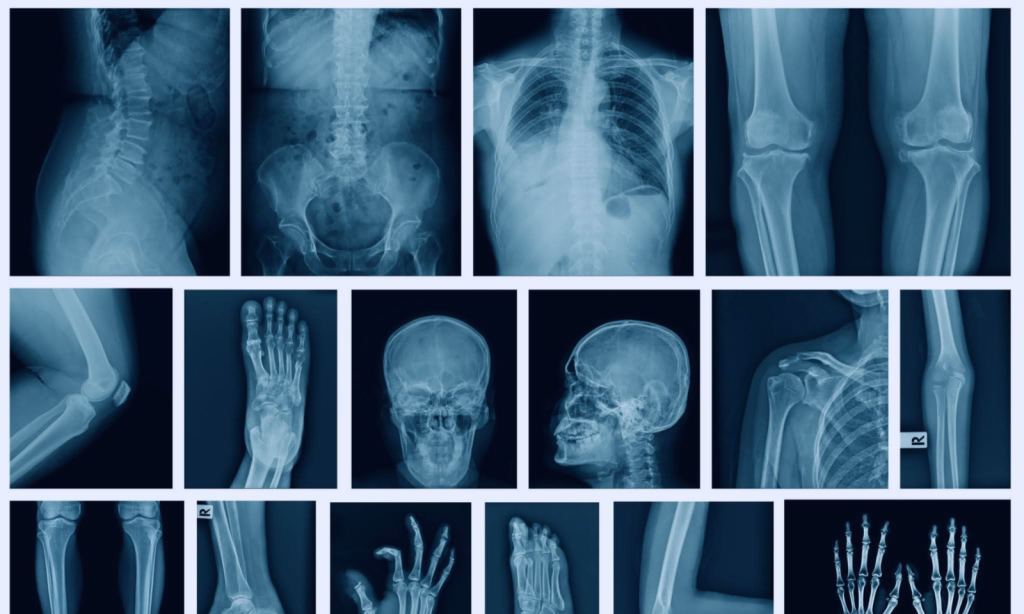
project
Revolutionizing Arthritis Trials with AI-Driven Imaging Biomarkers
The client needed a more accurate and automated solution to enable smaller, cost-efficient trials while maintaining regulatory confidence.
-

case-study
Rethink Site Selection. Our AI Model Beats Traditional Choices 90% of the Time
90% of model-recommended sites outperformed legacy solutions in the US market
-

case-study
5x Boost in In-Silico Drug Discovery with a Multimodal LLM
The new LLM allows the client’s research team to explore molecular properties and relationships more effectively.
Trusted AI Partner for Pharma Organizations


years of experience in deploying AI solutions

NPS – metric measured on a scale from -100 to +100

commercial AI projects delivered overall, including pharma
Built on Proven AI Capabilities for Regulated Clinical Workflows
deepsense.ai combines deep AI engineering with experience in regulated, data-heavy enterprise environments. We design and build AI workflows that are accurate, auditable, integrated, and ready to move beyond pilot mode.

LLM & RAG Systems
Source-grounded AI over trusted clinical, scientific, and internal knowledge — designed to reduce hallucination risk and support evidence-backed outputs.

Agentic AI Workflows
Multi-step AI workflows for protocol review, criteria extraction, feasibility assessment, and evidence synthesis, with human review built in.

Data & System Integration
Integration with clinical systems, enterprise data sources, document repositories, and existing tools — using both structured and unstructured data.

AI Governance & Regulated Delivery
Model evaluation, output validation, traceability, confidence scoring, auditability, and production-grade delivery for regulated pharma environments.
Insights and Resources for Regulated AI in Pharma
Learn more about our insights and expertise from delivering pharma, life sciences, and medical AI solutions – both from the industry, business, and technical perspectives.
-
Webinar
Clinical Trial Protocol & Feasibility Intelligence Demo
-
Webinar
AI for Drug Discovery: Testing World Models on Molecular Data
-
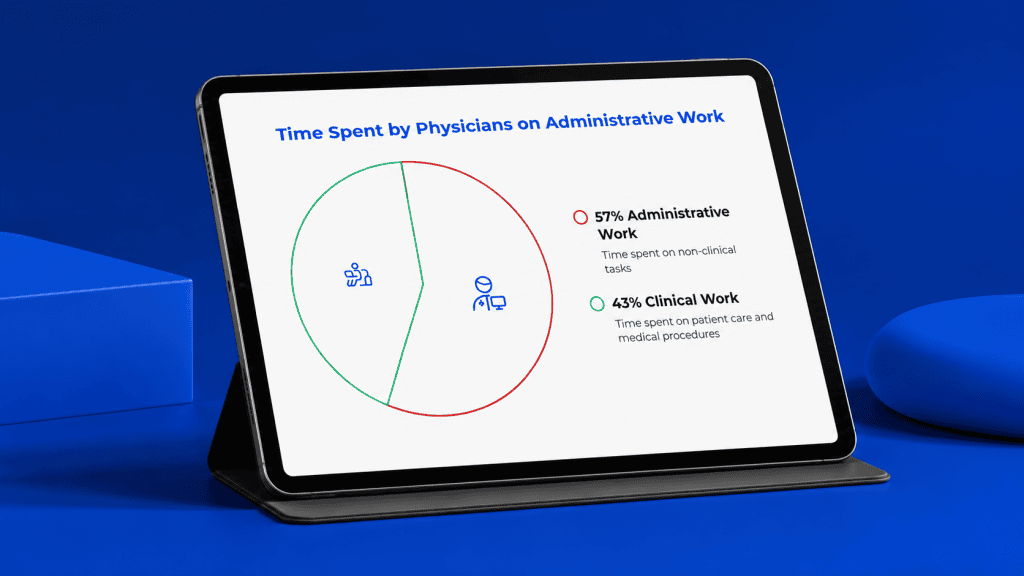
Blog post
96.3% Physician-Accepted, Zero Hallucinations: Healthcare AI in Production
-

Blog post
GxP-Compliant AI Deployment. The New Competitive Edge in Life Sciences
-
Webinar
MCP Apps Explained: Building Agent-Driven UIs with Model Context Protocol
-

Blog post
Building MCPs for Regulated Industries: Lessons from Production AI in Life Sciences
Still have questions?
What is protocol and feasibility intelligence?
Protocol and feasibility intelligence is an AI-supported workflow for reviewing protocol complexity, feasibility assumptions, amendment risk, inclusion/exclusion criteria, site selection inputs, and enrollment risks before trial start.
The goal is not to replace clinical judgment. The goal is to help expert teams surface risks earlier, reuse historical trial knowledge more effectively, and make better-informed protocol and feasibility decisions.
Is this a clinical trial intelligence platform?
No. deepsense.ai builds private, custom AI workflows integrated with your data, systems, and governance model.
The solution can complement and integrate with existing trial intelligence, feasibility, CTMS, EDC, eTMF, document management, and enterprise data platforms.
How is this different from off-the-shelf trial intelligence tools?
Off-the-shelf tools can provide valuable benchmarks and standardized analytics. deepsense.ai focuses on private knowledge, internal data, custom workflows, governance, and integration with existing enterprise systems.
We help pharma teams reuse processes and systems that already work — while adding an AI intelligence layer around them.
What data is needed to start?
Typical inputs may include protocols, protocol synopses, historical trial data, amendments, feasibility inputs, site performance, enrollment data, SOPs, internal knowledge bases, and selected external sources.
The exact scope depends on the use case, data availability, and governance requirements.
Can we start without sharing confidential protocols?
Yes. Early discussions and demos can start with public protocol samples, synthetic data, anonymized synopses, or fictional trial examples.
For qualified opportunities, we can also run a private protocol risk teardown under NDA.
How long does an MVP take?
A focused MVP can typically be scoped for 6–10 weeks, depending on data availability, workflow complexity, integration requirements, and governance needs.
A practical MVP may start with protocol risk review, I/E criteria operationalization, feasibility risk flags, or historical trial comparison.
Does AI make clinical or regulatory decisions?
No. The workflow supports human-led decision-making.
AI-generated outputs should be reviewable, source-backed, and auditable — with recommendations, citations, confidence levels, and human approval steps built into the process.
Can this integrate with our existing systems?
Yes. The offer is designed to reuse existing systems and data investments rather than replace them.
Potential integrations may include clinical document repositories, CTMS, EDC, eTMF, data warehouses, internal knowledge bases, and approved external sources.
Is the architecture model-agnostic?
Yes. The workflow can be designed to support different models and avoid unnecessary lock-in.
This allows organizations to adapt as enterprise AI standards, model capabilities, and vendor policies evolve.
Who is this for?
This is designed for Clinical Development, Clinical Operations, Feasibility, Study Teams, AI Strategy Leads, Portfolio Leads, and executive sponsors responsible for improving clinical trial planning and execution readiness.