Where Early Feasibility Risks Emerge
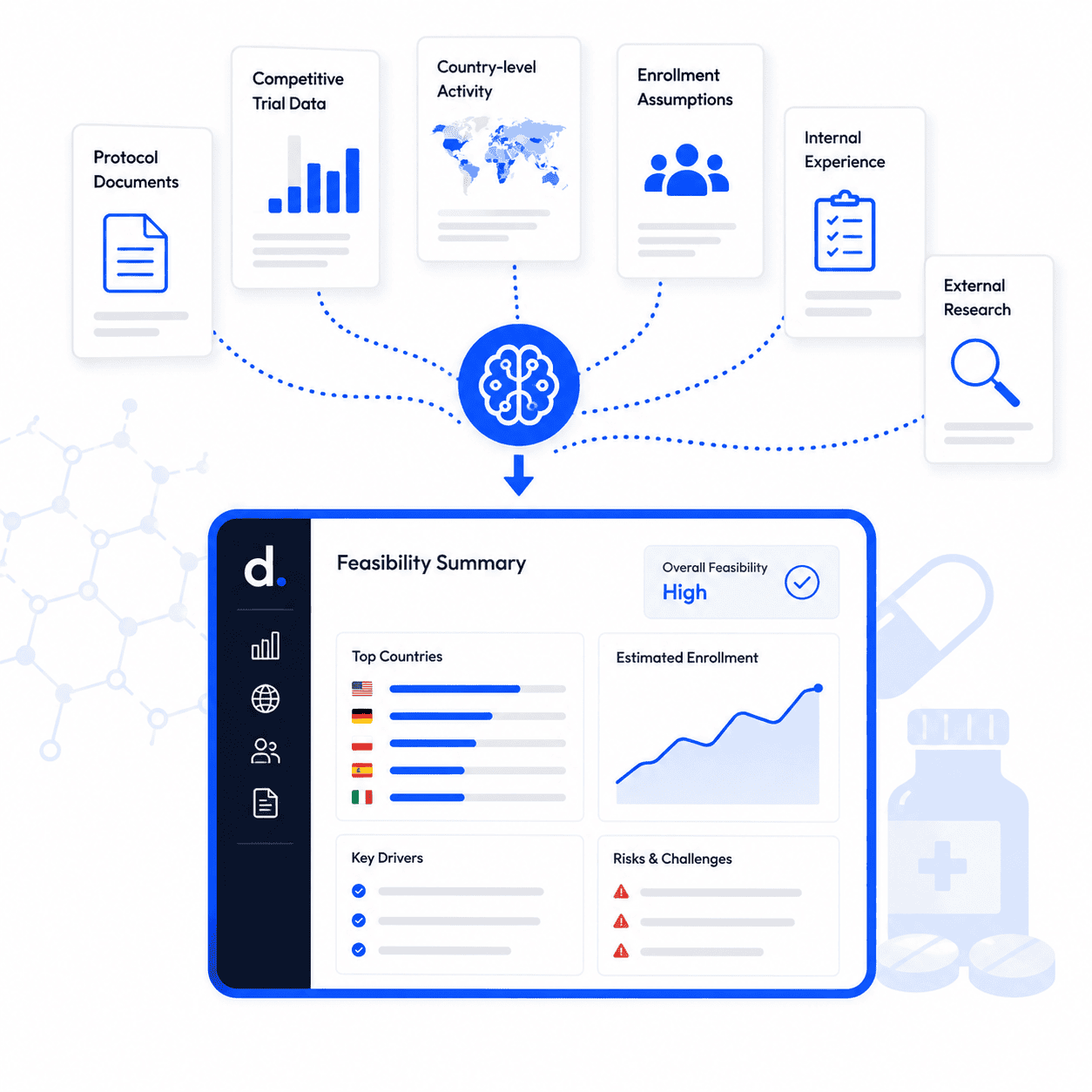
Feasibility teams often have to piece together protocol assumptions, competing trial activity, country conditions, enrollment targets, and internal experience before they can judge where a study may face risk. That review can still take significant manual effort and often depends on external support.
From Protocol Synopsis to Concrete Feasibility Risks
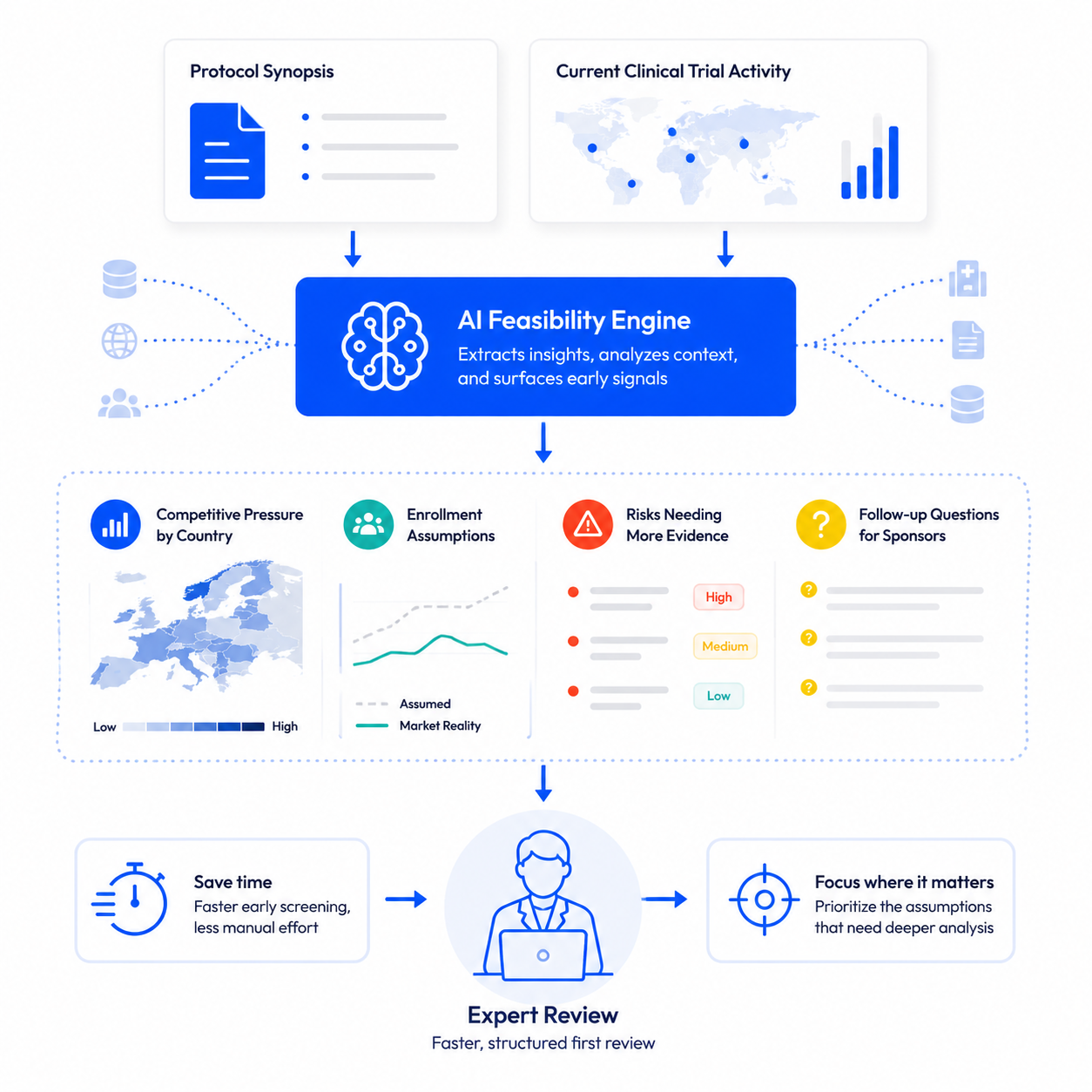
The workflow reviews a protocol synopsis against current clinical trial activity to show where feasibility assumptions may need a closer look. It can highlight competitive pressure by country, question enrollment assumptions, flag areas with weak supporting evidence, and generate specific follow-up questions for the sponsor or study team.
The output gives clinical experts a structured first-pass review they can use to decide what needs deeper analysis.
Meet the Speakers
Szymon Komorowski
Life Sciences & Healthcare Advisor, deepsense.ai

Szymon Komorowski is Life Sciences & Healthcare Advisor at deepsense.ai. He brings 17 years of experience across pharma and life sciences, including leadership roles at IQVIA, Deloitte, Delta Pharma Adria, and SoftForYou, spanning pharma strategy, technology deployment, commercial analytics, digital HCP engagement, patient pathways, and healthcare policy. At deepsense.ai he connects the company’s AI engineering expertise with real-world healthcare and pharma challenges, including work with partners such as Anthropic, Google, OpenAI, and AWS.
Maks Operlejn
Senior Machine Learning Engineer, deepsense.ai

Maks is a Senior Machine Learning Engineer with a research background in medical imaging and published work in IEEE and MDPI. He now builds Generative AI and NLP systems for enterprise, pharma, and life sciences.
His recent work includes an LLM system automating pharmaceutical IRB workflows, an MCP-based interface across multiple data sources, and LLM-powered document processing pipelines. He also contributes to OpenAI and Anthropic partnerships and open-source projects including LangChain and Unstructured.
How the Workflow Works
The workflow processes a mock clinical trial protocol synopsis and compares key study assumptions with live ClinicalTrials.gov data. It then produces an early feasibility and risk review for expert assessment.

1. Market and competitive trial activity
The workflow identifies active studies relevant to the indication and compares activity across planned countries.
2. Country saturation analysis
Planned markets are assessed against current trial activity.
3. Protocol risk review
The system reviews elements of the synopsis that may affect operational feasibility.
4. Feasibility and enrollment risk flags
The AI surfaces potential issues that could affect recruitment or execution.
5. Sponsor follow-up questions
Instead of returning a generic summary, the workflow turns identified risks into concrete questions. This makes the output easier to use in an actual feasibility review.
Why We Built the Demo This Way
Who This Is For
This walkthrough is built for senior teams shaping clinical trial planning, feasibility, and AI adoption, including:
- Clinical Development and Clinical Operations
- Feasibility and Site Strategy teams
- Study and Program Leads
- Clinical Data and Analytics teams
- AI and Digital Transformation leaders supporting Clinical Development
When is this relevant?
It is especially relevant if you are evaluating AI vendors, looking to reduce manual feasibility work, improve protocol review, make better use of historical trial knowledge, or bring external trial data into internal decision-making.
For teams already using commercial trial intelligence platforms, the demo also shows what a custom AI layer connected to your own data, systems, workflows, and governance model could add.
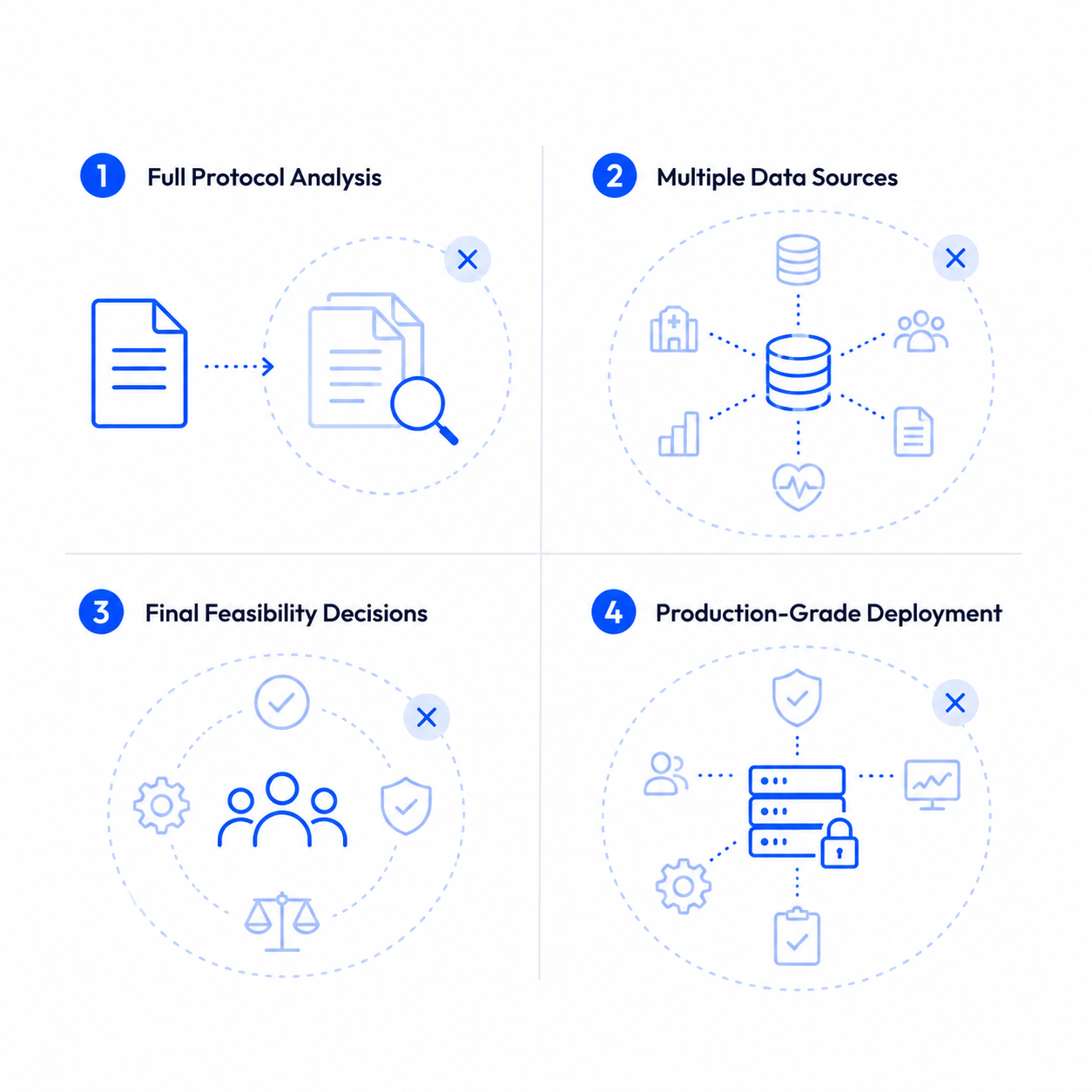
What This Demo Does Not Show
1. Full Protocol Analysis: The demo uses mock protocol synopses. Full protocols would allow deeper analysis of I/E criteria, endpoints, visit schedules, amendment risk, and site feasibility.
2. Multiple Data Sources: The current version uses ClinicalTrials.gov. A production workflow could also connect internal trial history, enrollment and site data, commercial sources, epidemiology data, and RWD.
3. Final Feasibility Decisions: The demo supports early risk screening. Clinical, operational, and regulatory decisions remain with expert teams.
4. Production-Grade Deployment: Integration, validation, access controls, monitoring, governance, and auditability would be added for deployment in a sponsor environment.
FAQ: Clinical Trial Protocol
& Feasibility Intelligence Demo
What is the input to the demo?
The demo uses a mock clinical trial protocol synopsis.
The synopsis provides enough information for an early review of study assumptions, competitive activity, country strategy, and potential feasibility risks.
Does the demo analyze a full clinical trial protocol?
No.
The current version focuses on the protocol synopsis stage. A full protocol would allow a more detailed review of eligibility criteria, operational burden, amendment risk, endpoints, site strategy, and other study design factors.
What external data does the demo use?
The current demo uses ClinicalTrials.gov as the external source for active and recruiting clinical trial information.
In a production system, the workflow could connect to additional internal and external sources.
What does the AI generate?
The core AI-generated output shown in the demo is the Flagged Issues & Sponsor Follow-Ups analysis.
For each issue, the system brings together supporting evidence, a recommended area for review, and a specific follow-up question.
Is this a feasibility prediction model?
No.
The demo provides early feasibility and risk screening based on the information available in the synopsis and the connected external data.
Its purpose is to help experts identify assumptions that need further investigation.
Can this work with our internal clinical data?
Yes. That is the intended direction for a production implementation.
The workflow can be extended to use internal trial history, site data, enrollment data, feasibility assessments, protocol repositories, and other approved enterprise sources.
Can it integrate with existing clinical systems?
Yes.
A production implementation can be designed around the systems and data architecture already used by the organization rather than requiring a separate standalone platform.
Does AI make the final recommendation?
No.
The system supports clinical and operational experts. It surfaces evidence, risks, and questions for review. Final decisions remain human-led.
Why use a custom workflow instead of an off-the-shelf tool?
Commercial trial intelligence tools can provide valuable data and benchmarks.
A custom AI workflow becomes useful when an organization wants to combine those external sources with its own protocols, historical trial experience, internal rules, data, and decision process.