
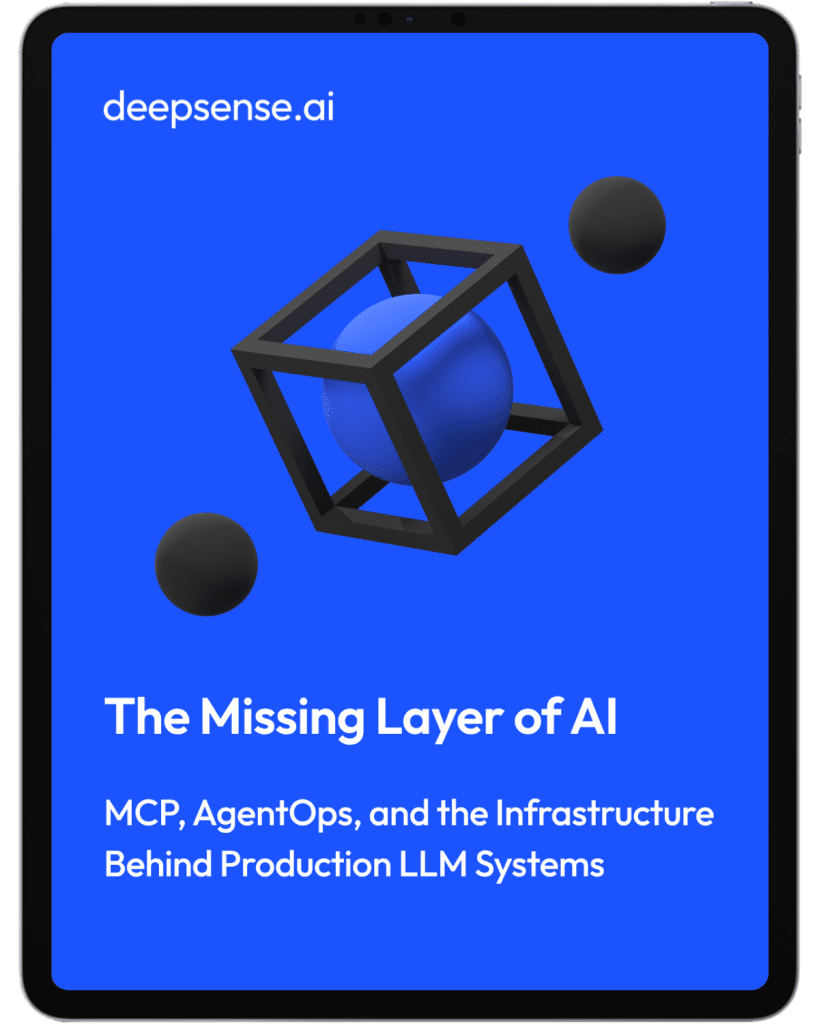
A practical 149-page guide for technical leaders operationalizing AI at scale. Built from production deployments of MCP systems, AI agents, inference infrastructure, and enterprise AI platforms. Written by Senior Tech Leads, Machine Learning Engineers, and MLOps specialists with 8+ years of experience delivering AI systems in production and working with Anthropic, OpenAI, AWS, and Google Cloud.
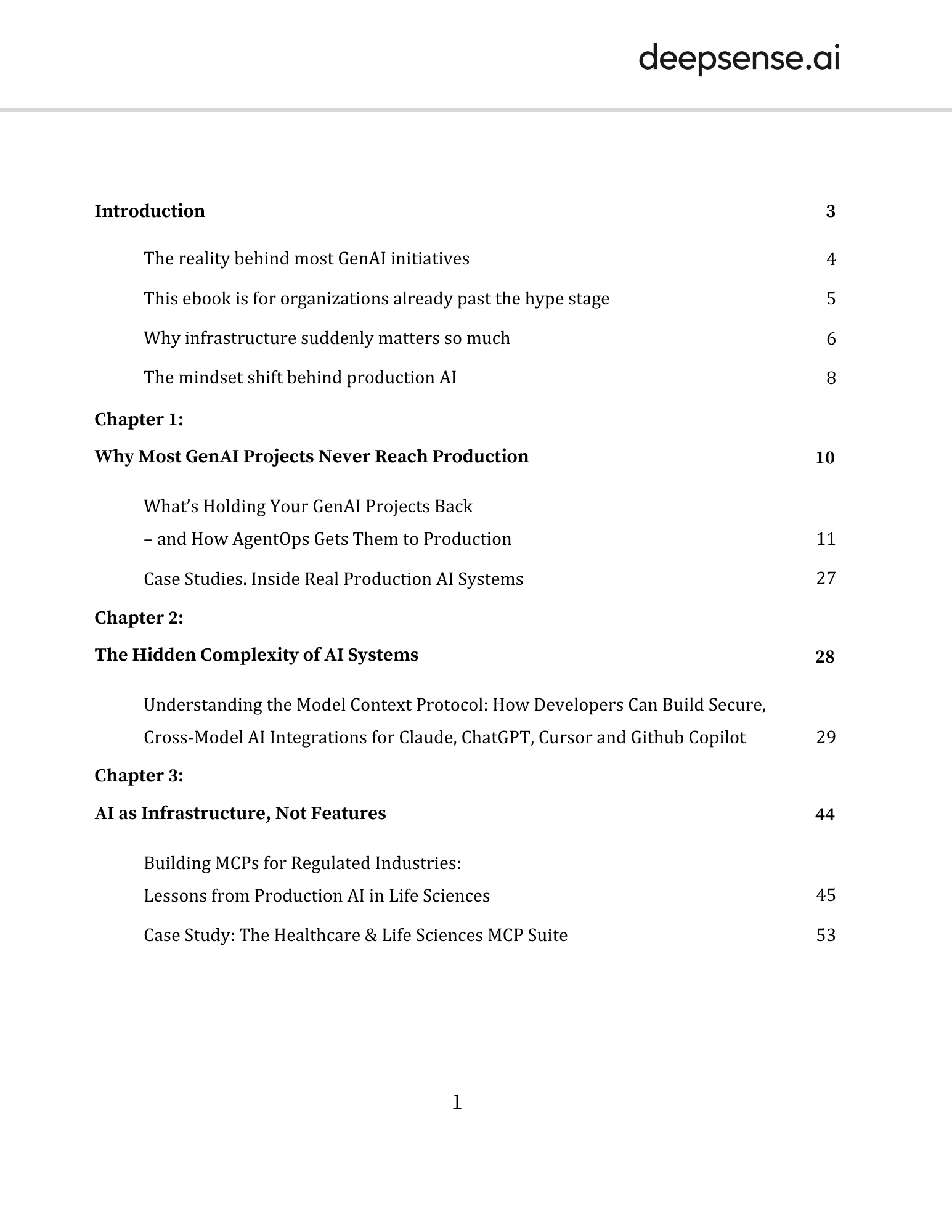
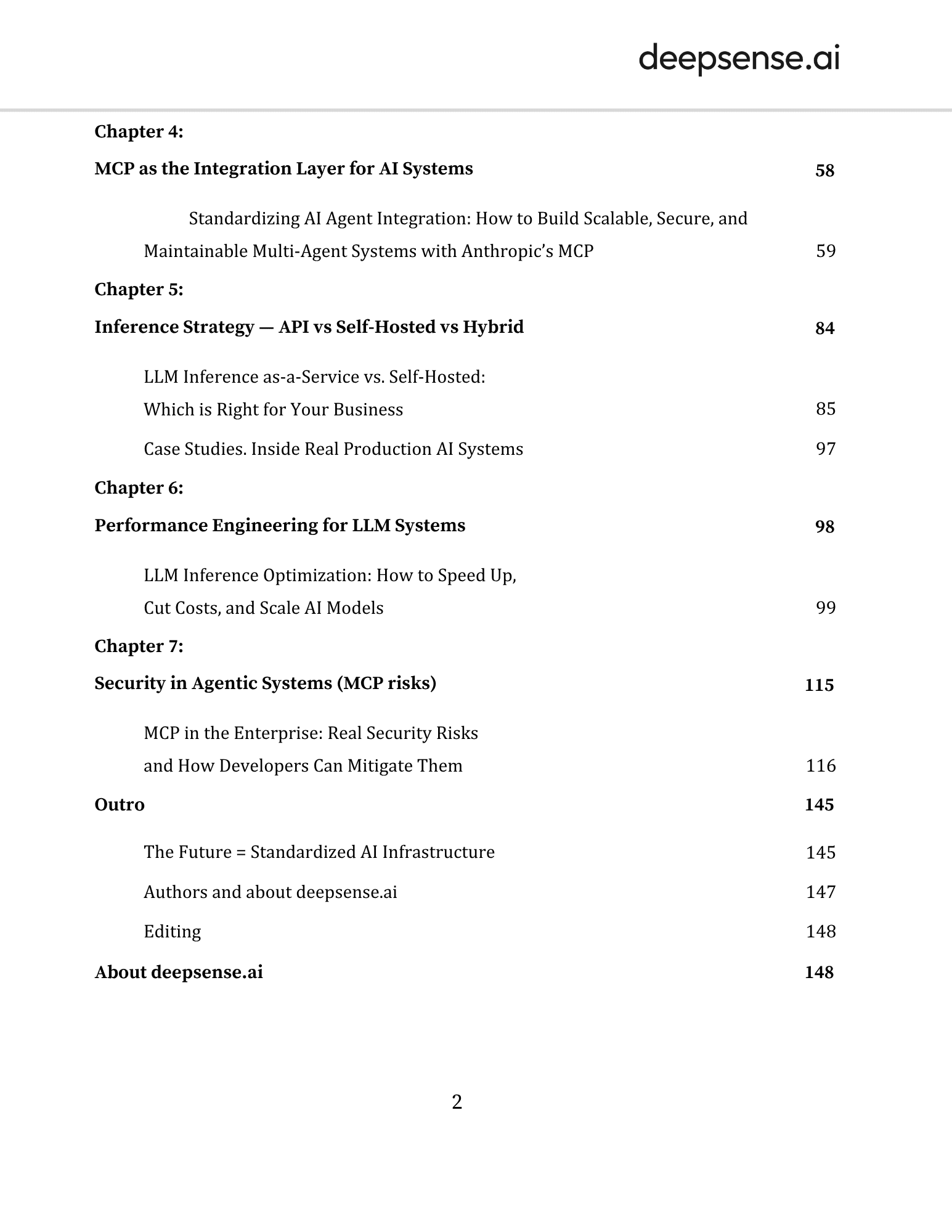
What’s Inside the Report


pages of production-focused AI infrastructure guidance

technical visuals, architectural diagrams,
and benchmark comparisons

production-ready code snippets
and implementation examples

Who Is This For?
This ebook is designed for organizations already past the AI hype stage — teams that understand AI’s strategic role and now need to make it reliable, secure, and scalable in production.
CTOs & Heads of AI
Building AI systems that move from experimentation to production impact.
VPs of Engineering & AI Platform Owners
Designing infrastructure for agentic systems, MCP, and enterprise integrations.
Solution Architects & Technical Leaders
Making decisions around inference architecture, governance, observability, and security.
Enterprise AI & Data Teams
Operationalizing AI across regulated, large-scale, and data-intensive environments.
What you’ll learn
How MCP standardizes enterprise AI integration
How Model Context Protocol enables reusable integrations across Claude, ChatGPT, Gemini, databases, APIs, and enterprise tools using a unified architecture.
How production multi-agent systems are actually built
Lessons from real MCP deployments orchestrating 15+ specialized AI agents with Databricks, structured tool registries, observability pipelines, and guardrails.
How regulated industries deploy AI safely
Real healthcare and life sciences deployment patterns covering HIPAA-aware MCP architectures, audit logging, isolated containers, and secure AWS infrastructure.
How to optimize inference performance and costs
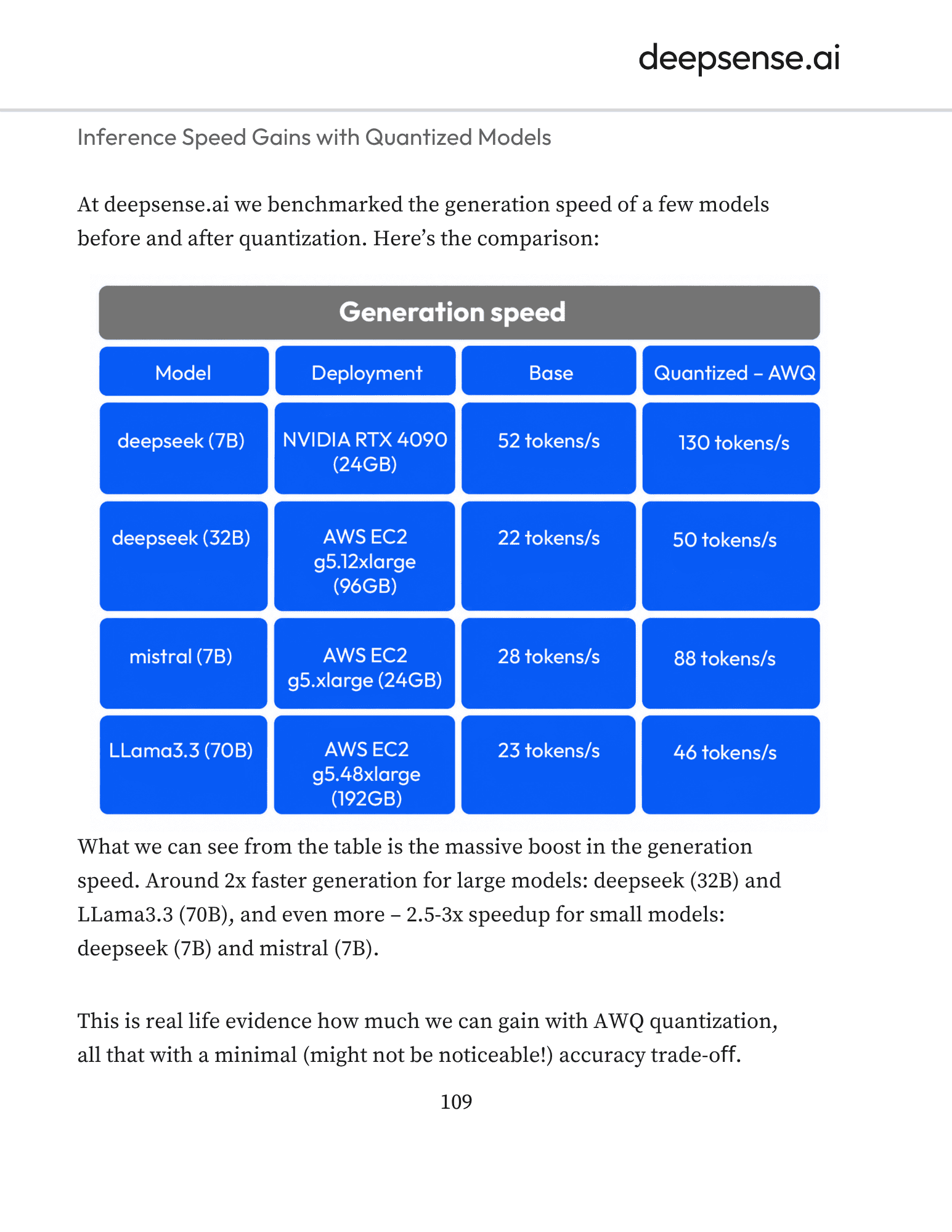
Practical benchmarks for quantization, continuous batching, KV caching, and vLLM — including examples delivering ~2–3× faster inference.
What security risks emerge in MCP-based systems
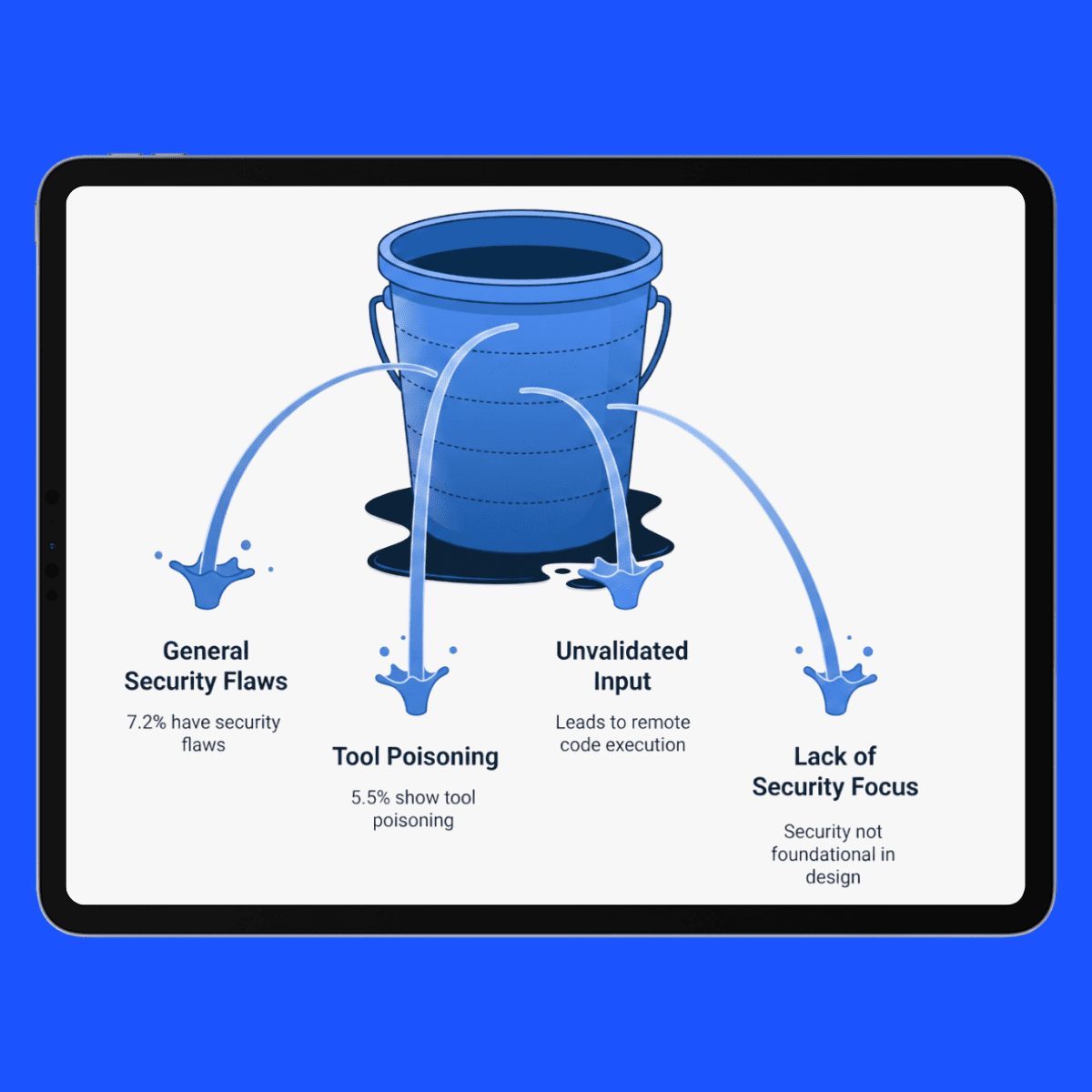
Enterprise MCP risks explained through real examples: tool poisoning, prompt injection, cross-tool attacks, privilege escalation, and supply-chain vulnerabilities.

Frequently Asked Questions
What is The Missing Layer of AI ebook about?
The Missing Layer of AI is a practical guide to the infrastructure required to move GenAI systems beyond proofs of concept and into reliable production environments. It covers MCP, AgentOps, LLM inference, AI security, enterprise integrations, evaluation, observability, governance, and deployment patterns for production LLM systems.
Who is this ebook for?
The ebook is written for CTOs, Heads of AI, VPs of Engineering, AI Platform Owners, Solution Architects, and technical leaders responsible for operationalizing AI. It is especially relevant for organizations scaling beyond PoCs, deploying LLM-powered applications, building AI agents, experimenting with MCP, or defining governance standards for AI systems.
What topics are covered inside the ebook?
The ebook covers why GenAI projects fail to reach production, how AgentOps supports reliable AI agents, how MCP standardizes AI integrations, how to design MCP systems for regulated industries, how to choose between API-based and self-hosted LLM inference, how to optimize LLM performance, and how to mitigate security risks in agentic systems.
Why do many GenAI projects fail after the PoC stage?
Many GenAI projects fail because the prototype works in a controlled environment but lacks the operational layer needed for production. Common blockers include unstable behavior under real traffic, hallucinations, unclear access controls, spiraling inference costs, fragile integrations, and insufficient observability, evaluation, and lifecycle management.
What is AgentOps, and why does it matter?
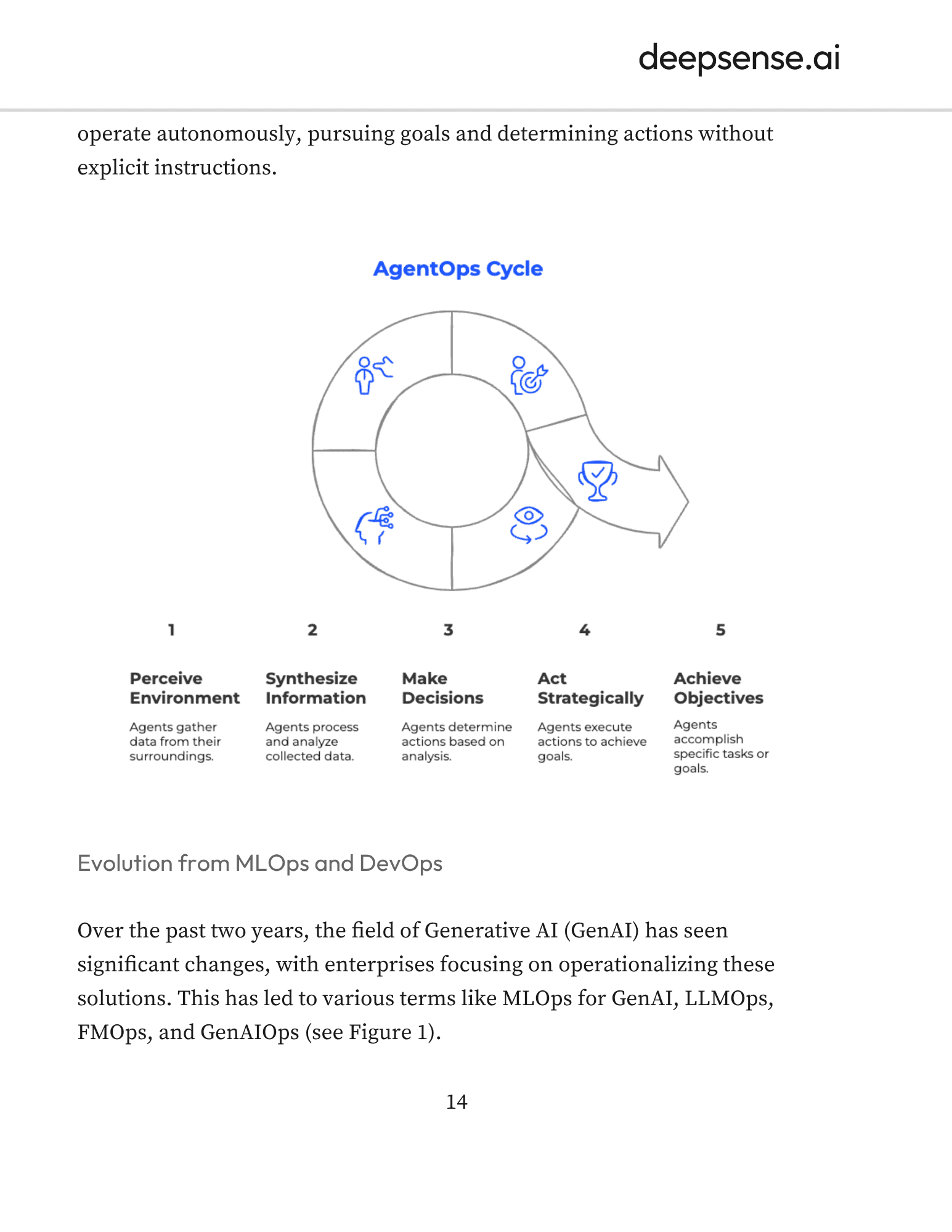
AgentOps is the operational discipline for deploying, monitoring, evaluating, and improving AI agents in production. It extends practices from DevOps and MLOps with agent-specific capabilities such as tool management, prompt orchestration, memory, task decomposition, observability, security, governance, and trajectory evaluation.
What is MCP in enterprise AI systems?
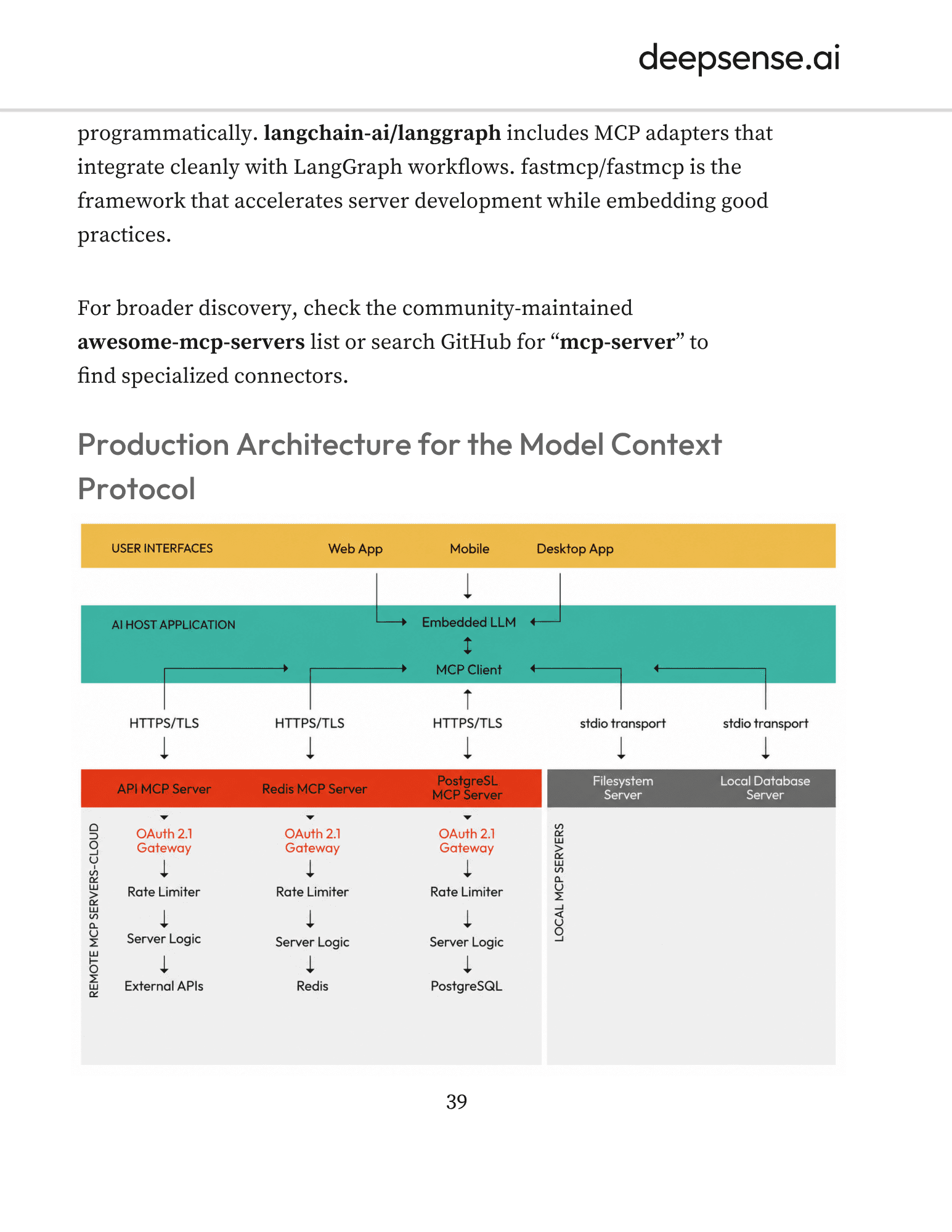
MCP, or Model Context Protocol, is an open standard for connecting AI systems to external tools, databases, APIs, and enterprise applications. Instead of building separate custom integrations for every model provider, MCP allows teams to create reusable, model-agnostic connectors that can support systems such as Claude, ChatGPT, Gemini, Cursor, and GitHub Copilot.
Why is MCP important for production AI infrastructure?
MCP helps reduce integration fragmentation by standardizing how AI agents interact with tools and external systems. This matters because production AI systems increasingly need access to CRMs, databases, internal applications, file storage, APIs, and operational workflows — while still maintaining security boundaries, auditability, and governance.
Does the ebook explain how to use MCP in regulated industries?
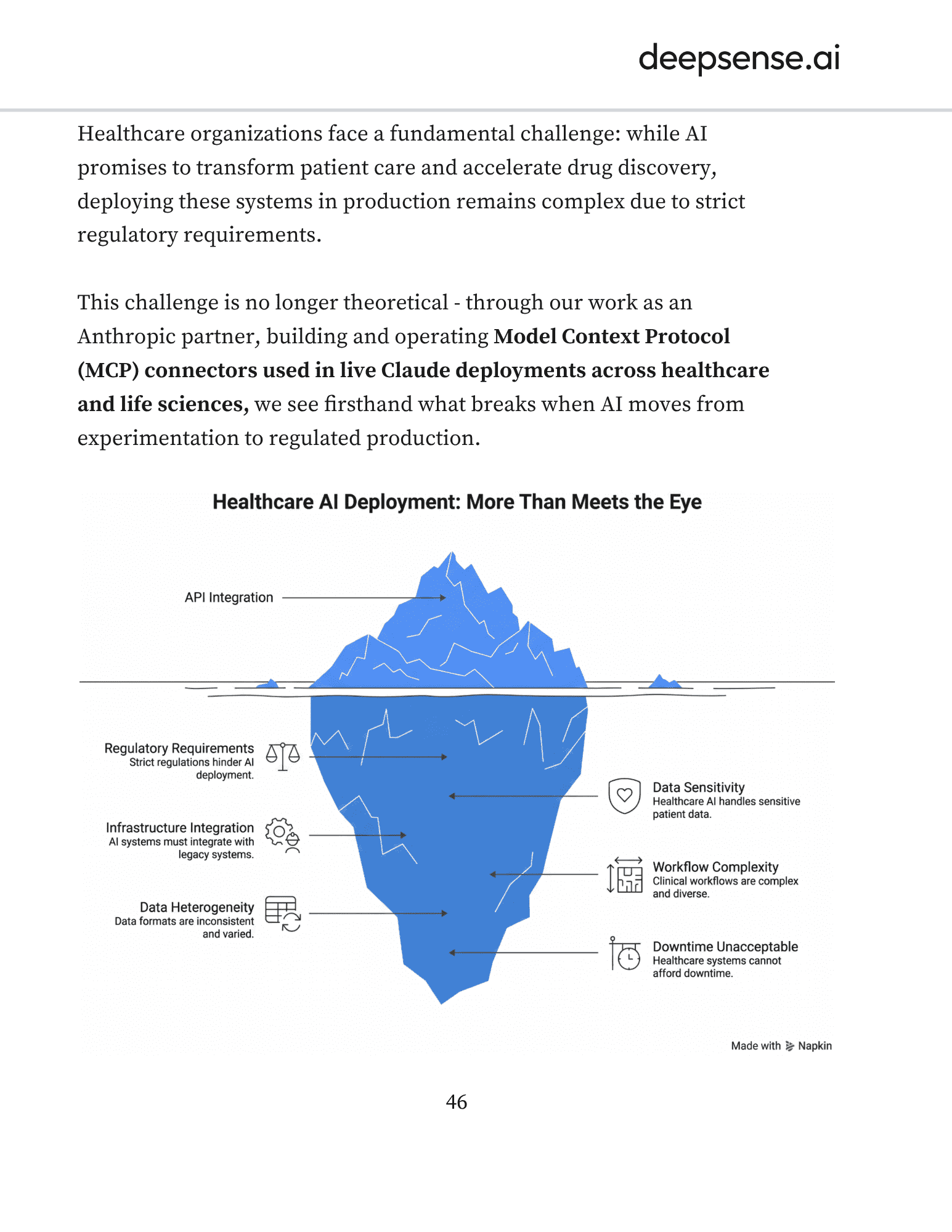
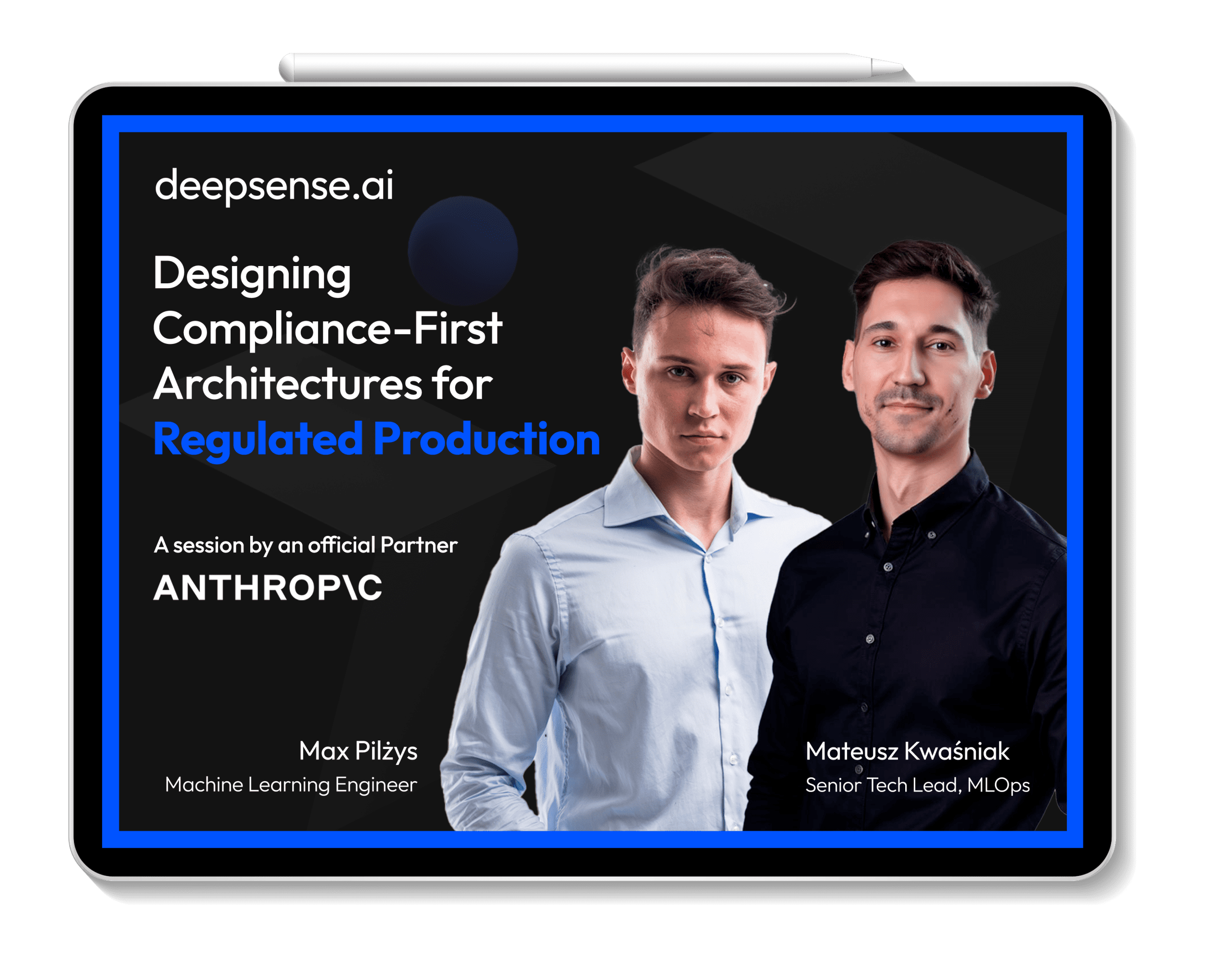
Yes. The ebook includes a dedicated chapter on building MCP systems for regulated industries, with lessons from healthcare and life sciences deployments. It discusses why MCPs are not just API integrations in regulated environments, how HIPAA, FDA, and GxP requirements shape architecture, and why auditability, access control, isolation, and structured logging must be designed from the start.
What does the ebook say about LLM inference strategy?
The ebook compares LLM inference as-a-service, self-hosted LLM deployment, and hybrid approaches. It explains how each option affects cost, scalability, performance, control, customization, security, compliance, and long-term infrastructure ownership.
When should a company choose API-based LLM inference instead of self-hosting?
API-based LLM inference is usually the best starting point when a company wants fast deployment, flexible usage, access to frontier models, and minimal infrastructure overhead. It is especially suitable for early exploration, variable traffic, small-scale applications, or teams that do not yet want to manage GPU infrastructure and serving systems.
When does self-hosted LLM inference make sense?
Self-hosting can make sense when AI is core to the business strategy, usage is high and predictable, customization needs are significant, or strict data sovereignty and compliance requirements demand greater control over infrastructure. The ebook notes that self-hosting requires planning, MLOps expertise, GPU availability, serving frameworks, monitoring, storage, and networking infrastructure.
How can organizations reduce LLM inference cost and latency?
The ebook explains several LLM inference optimization techniques, including model distillation, quantization, continuous batching, and KV caching. These methods can reduce memory usage, improve throughput, accelerate generation, and lower cost per request when applied appropriately.
Does the ebook cover AI agent security risks?
Yes. The ebook includes a full chapter on MCP and agentic AI security risks, including tool poisoning, context poisoning, cross-tool attacks, preference manipulation, supply-chain poisoning, rug-pull updates, over-privileged agents, and insecure MCP server implementations.
What security practices does the ebook recommend for MCP and AI agents?
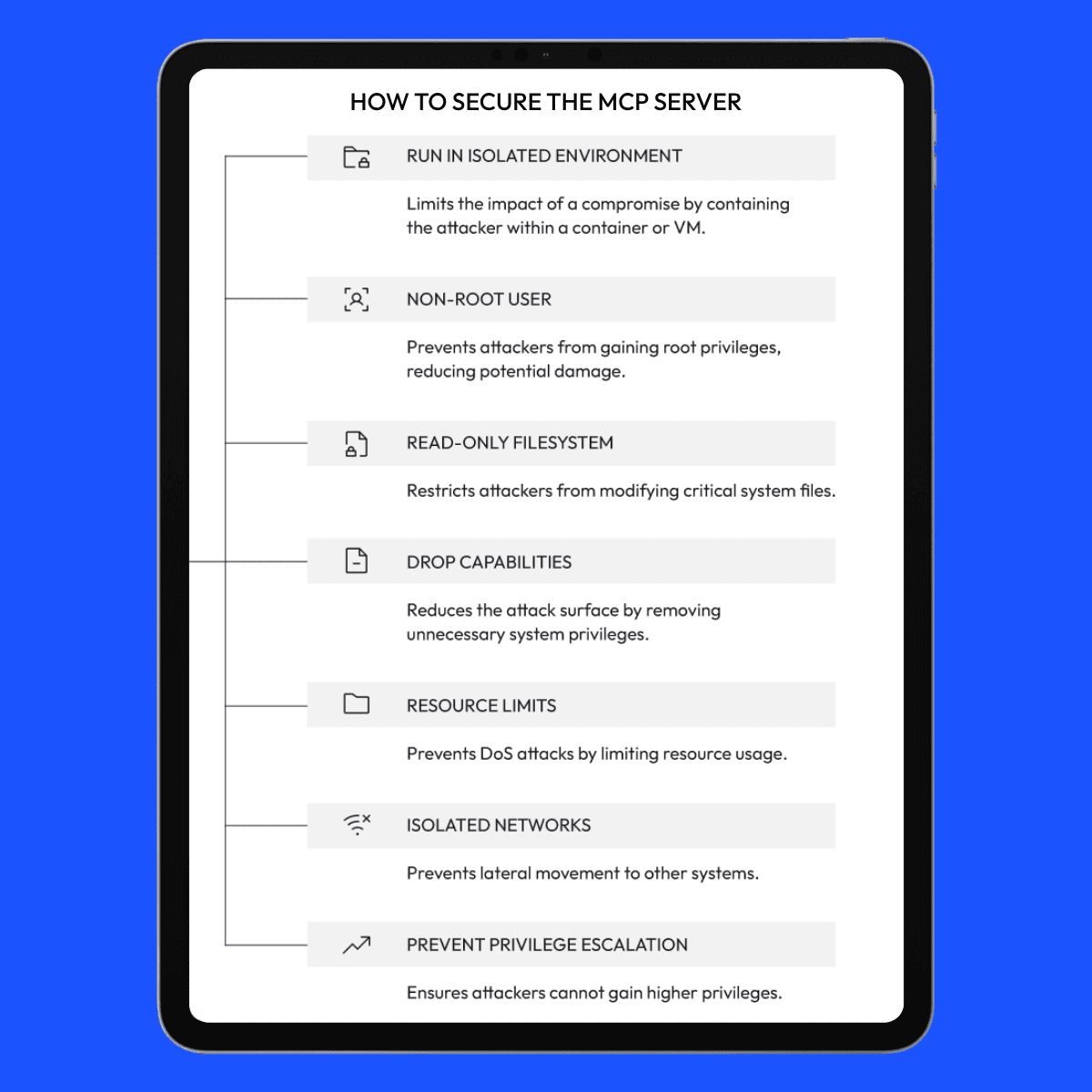
The ebook recommends running MCP servers in isolated environments, applying least privilege access, requiring human approval for risky operations, pinning MCP server versions, verifying checksums, maintaining allowlists, auditing before installation, and monitoring behavioral changes such as network activity, file access, and cross-tool interactions.
Does the ebook include real-world AI case studies?
Yes. The ebook references production deployments across MCP systems, AI agents, RAG platforms, inference optimization, governance, enterprise AI infrastructure, and regulated AI environments. The examples span industries including healthcare, pharma, telecom, SaaS, manufacturing, and financial services.
Why is AI infrastructure becoming more important than model choice alone?
As AI systems move into real workflows, the main challenge shifts from model capability to operational reliability. Production AI requires orchestration, evaluation, observability, cost controls, inference optimization, access management, governance policies, and secure integrations with enterprise systems.
What is the main takeaway from the ebook?
The central message is that AI should no longer be treated as a standalone product feature. Production AI should be treated as operational infrastructure, with lifecycle management, monitoring, versioning, orchestration, security boundaries, optimization, evaluation, and governance built into the system from the beginning.