
Production AI for Knowledge, Workflows, and Voice
We help companies turn GenAI into reliable business systems — from RAG and AI agents to voice AI, evaluation frameworks, and secure enterprise integrations. Our work combines architecture, governance, and hands-on engineering to support deployment, reduce operational effort, and prove ROI beyond the PoC.
Production AI is Where the Value Is Won
Many organizations we talk to already have AI pilots, internal chatbots, or early copilots based on different LLM models. The hard part is turning them into systems that people trust, use, and rely on every day. Common blockers from our experience include:

Unverifiable answers that users cannot trust
Outputs may sound plausible, but without citations, source references, or faithfulness checks, adoption stalls quickly.

Weak retrieval across fragmented enterprise knowledge
Critical information is spread across documents, tickets, wikis, SharePoint, CRMs, databases, and internal tools, making RAG quality hard to scale.

AI stuck outside real workflows
Many pilots answer questions, but do not integrate with business systems, APIs, approvals, tool use, or day-to-day operational processes.

No clear evaluation framework before rollout
Teams often lack benchmark datasets, quality metrics, failure-mode analysis, or task-completion criteria tied to real user needs.

ROI that is assumed, not measured
Without dashboards connecting technical performance to business KPIs, leaders cannot see whether AI is reducing effort, improving throughput, or creating measurable value.

Reliability issues once the system meets real users
Early demos often break under edge cases, changing data, unpredictable user behavior, tool failures, or complex multi-step tasks.

Cost, latency, and scalability problems after launch
Model choice, infrastructure, orchestration, and retrieval design directly affect response time, unit economics, and long-term adoption.

Security, compliance, and auditability gaps
Production GenAI needs RBAC, tenant isolation, secure data access, controlled tool execution, audit logs, and monitoring from the start — not as a late-stage patch.
From global enterprises to AI-native companies, deepsense.ai helps teams build, deploy, and scale AI systems that deliver measurable business impact — securely, reliably, and in production.



























Navigate the AI Platform Landscape
with a Partner Close to the Frontier
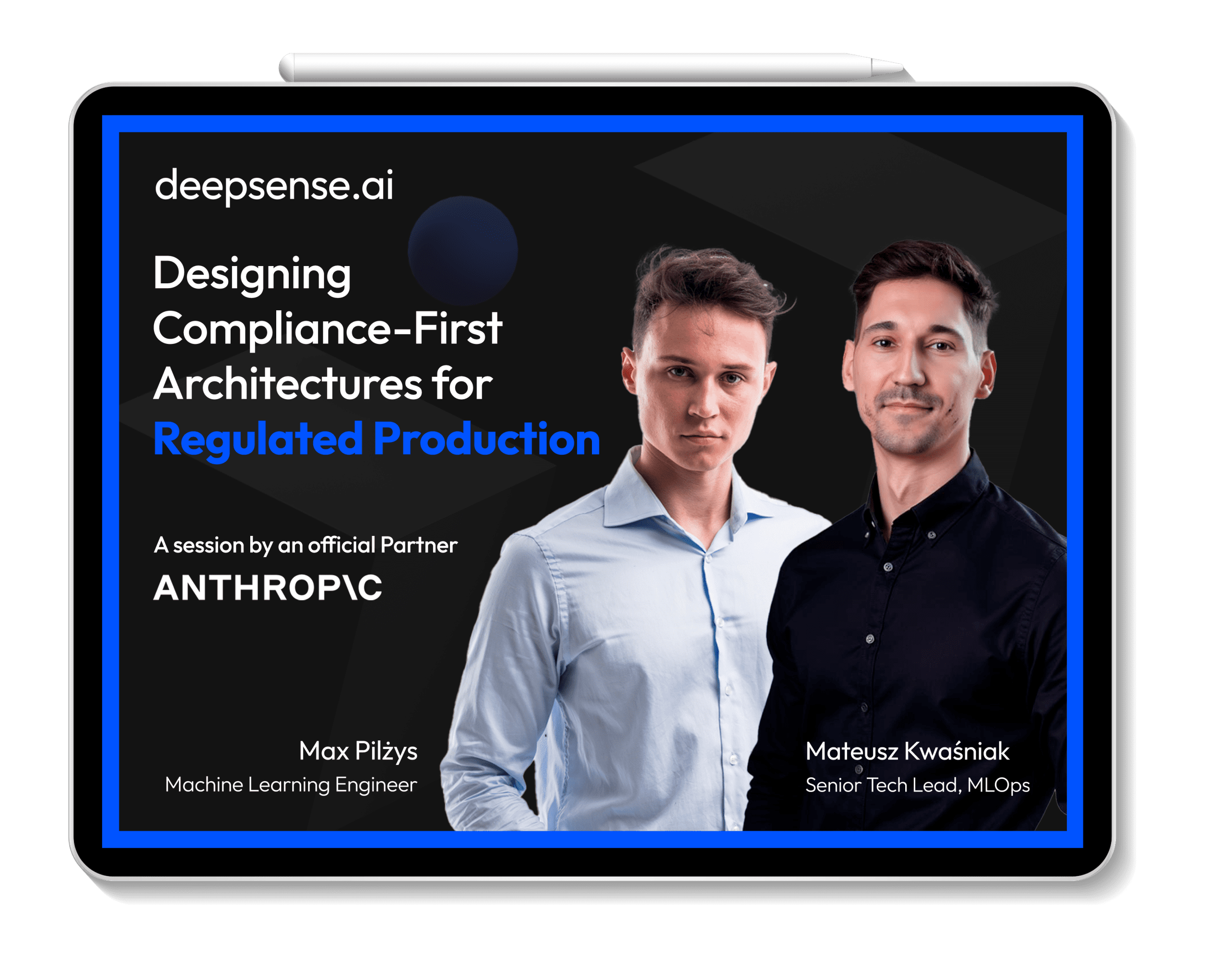
Model, cloud, and infrastructure decisions shape cost, latency, security, reliability, and vendor lock-in. As an official OpenAI Services Partner and Anthropic Service Partner — with ecosystem partnerships across Google Cloud, AWS, and Anyscale — deepsense.ai helps enterprises choose, build, and scale the AI stack that fits their production requirements. We combine frontier models, cloud infrastructure, scalable AI workloads, RAG, agents, MCP servers, and secure integrations to deliver AI systems that work reliably in production.







Solutions Built Around the Problems Enterprises Actually Need AI to Solve
Enterprise GenAI only delivers ROI when it works across real data, real workflows, real users, and production constraints. We build RAG, AI agents, voice AI, evaluation frameworks, and secure deployment architectures that turn AI from promising demos into reliable business systems.

Agentic Systems and AI Copilots
Enterprise work is rarely a single prompt-and-response. Employees navigate multi-step processes, switch between tools, copy information across systems, wait for approvals, and repeat the same operational tasks every day.
AI agents can reduce this manual effort by executing workflows across enterprise systems with the right level of autonomy, supervision, and control.
We build agentic systems that are scalable, reliable, and secure. We design not only agents, but the execution harnesses around them: tool access, orchestration, memory, guardrails, approval flows, tracing, and evaluation.
What we deliver
- agents integrated with enterprise systems through tools, skills, and MCP servers
- multi-agent orchestration with structured handoffs between specialized agents
- memory and context management for long-running, stateful workflows
- human-in-the-loop controls for actions that require approval or expert review
- guardrails, permissions, sandboxing, and policy checks for safe execution
- tracing and observability for debugging, monitoring, and continuous improvement
- benchmark suites to test agent reliability before production rollout
- fallback and escalation mechanisms when automation should stop
Business value
- automate repetitive operational workflows
- reduce manual handoffs and cycle time
- improve consistency in complex business processes
- augment expert teams without compromising oversight
- move from “AI that answers” to “AI that helps work get done.”
RAG and Enterprise Knowledge Systems
Finding the right information across enterprise systems is slow, expensive, and frustrating. Knowledge is spread across documents, tickets, databases, wikis, SharePoint, CRMs, product systems, and internal tools.
Modern Retrieval-Augmented Generation changes that. Done well, RAG gives employees and customers faster access to trusted answers, reduces repetitive support work, improves decision-making, and powers smarter AI applications.
We build RAG systems that are fast, scalable, secure, and production-ready.
What we deliver
- robust data ingestion pipelines for reliable knowledge updates at scale
- high-performance vector, keyword, and hybrid indexes for low-latency retrieval
- advanced retrieval techniques such as query rewriting, hybrid search, reranking, metadata filtering, and contextual retrieval
- answers with citations and source references to increase user trust and adoption
- secure access control, RBAC, tenant isolation, and compliance-ready audit trails
- architectures that combine unstructured documents with structured enterprise data
- RAG systems connected to tools, APIs, and MCP servers to embed domain logic into the retrieval process
- multimodal information extraction pipelines for text, image, document, and vision-heavy use cases
- evaluation frameworks for retrieval quality, answer faithfulness, latency, and cost
Business value
- reduce time spent searching for information
- improve support, sales, legal, operations, and technical workflows
- make proprietary knowledge usable inside AI assistants and copilots
- increase user trust through source-grounded answers
- build AI systems that stay accurate as enterprise knowledge changes


Evaluation, Benchmarking, and Observability
AI solutions often overpromise and underdeliver. Early demos can look impressive, then fail under real data, real users, edge cases, latency requirements, or compliance constraints.
The difference between a successful AI system and a stalled PoC is usually a matter of evaluation discipline.
We treat evaluation as a core part of every engagement, not a final QA step. We measure whether the system works, where it fails, what it costs, how users respond, and whether it creates business value.
What we deliver
- use case prioritization based on business value, feasibility, data readiness, and risk
- benchmark datasets designed around real user tasks and failure modes
- retrieval metrics, answer-quality metrics, task-completion metrics, and hard business KPIs
- automated LLM-as-a-judge checks combined with deterministic metrics
- expert error analysis with SMEs for domain-critical systems
- production observability for latency, cost, quality, tool calls, failures, and adoption
- feedback loops from users and reviewers to improve the system after launch
- dashboards that connect technical performance with business outcomes
Business value
- avoid investing in AI use cases that will not productionize
- catch quality and reliability issues before rollout
- optimize cost, latency, and response quality continuously
- create executive confidence with measurable progress
- make ROI visible, not assumed
Voice AI and Real-time Assistants
Voice AI is one of the fastest ways to expose AI quality problems. If the bot is slow, interrupts badly, misunderstands intent, loses context, or fails to hand off properly, users drop the call.
We design and implement voice AI systems that balance customer experience, reliability, cost, and control. Depending on the use case, we use sequential ASR-LLM-TTS architectures, modern speech-to-speech APIs, deterministic call flows, or hybrid designs.
What we deliver
- realtime conversational architectures optimized for latency and reliability
- ASR, LLM, and TTS component selection based on use case constraints
- deterministic workflow logic for regulated or conversion-critical conversations
- telephony, CRM, calendar, ticketing, and booking-system integrations
- fallback, escalation, and live-agent handoff mechanisms
- quality evaluation for intent recognition, task completion, latency, containment, and user drop-off
Business value
- automate high-volume phone interactions
- improve booking, routing, and support workflows
- reduce manual call handling without damaging customer experience
- control cost and latency in production
- deploy voice AI that users are willing to complete conversations with


Secure Deployment and AI Operations
Enterprise GenAI does not end when the first version works. Models change, data changes, users behave unpredictably, costs fluctuate, and new risks appear in production.
We help you deploy and operate AI systems with enterprise-grade reliability, security, and cost control.
What we deliver
- deployment in cloud, private VPC, on-premise, or hybrid environments
- model selection across commercial APIs and self-hosted open-source models
- secure data access patterns and controlled tool execution
- RBAC, audit logs, prompt and response tracking, and policy controls
- monitoring for cost, latency, quality, drift, failures, and adoption
- evaluation pipelines integrated into CI/CD and production operations
- infrastructure optimization for scale, performance, and unit economics
- documentation and knowledge transfer for internal AI teams
Business value
- reduce operational risk after launch
- meet enterprise security and compliance requirements
- keep cost and latency predictable
- avoid vendor lock-in through flexible architecture
- give internal teams the control needed to scale AI responsibly
Accelerate Delivery Without Giving Up Architectural Control
ragbits is deepsense.ai’s modular, open-source framework for building production-grade RAG and agentic AI systems.
It helps our teams and clients move faster from prototype to enterprise deployment by reusing proven components for retrieval, orchestration, evaluation, tracing, and observability.
For technical teams, ragbits means composable architecture, transparent implementation, model flexibility, and faster iteration. For business leaders, it reduces delivery risk and shortens the path from idea to working system.
What ragbits helps us deliver
- modular RAG and agentic application architecture
- retrieval pipelines with ingestion, indexing, reranking, and evaluation
- agent workflows with tool use, MCP support, and orchestration
- tracing, logging, and observability for production debugging
- flexible integrations with models, vector stores, APIs, and enterprise systems
- deployment patterns that support secure, auditable, vendor-neutral AI systems

Case Studies: GenAI Measurable Impact
GenAI Guidance and Advisory
case-study
From AI Agent Prototypes to a Scalable Enterprise Architecture for Supply Chain Operations
The client gained a clear architectural roadmap for moving from early AI agent prototypes to a cohesive enterprise-scale platform strategy. The engagement reduced…

project
From Fragmented AI Experiments to a Scalable Enterprise Agentic AI Roadmap
We then designed the target architecture and transition roadmap, and moved into delivery alongside the client’s team, building the next generation…

case-study
From AI Advisory to MVP in 3 Months: Accelerating Time-to-Market for an AI Agent Customer Support Platform
We supported a fast-growing customer support platform in redefining its AI strategy and product roadmap to fully leverage the emerging AI Agents paradigm. The…

project
Guiding AI Success in Infrastructure Monitoring
The project delivered a clearer AI strategy, improved prototype performance with measurable quality gains, and equipped the client with practical methods…

case-study
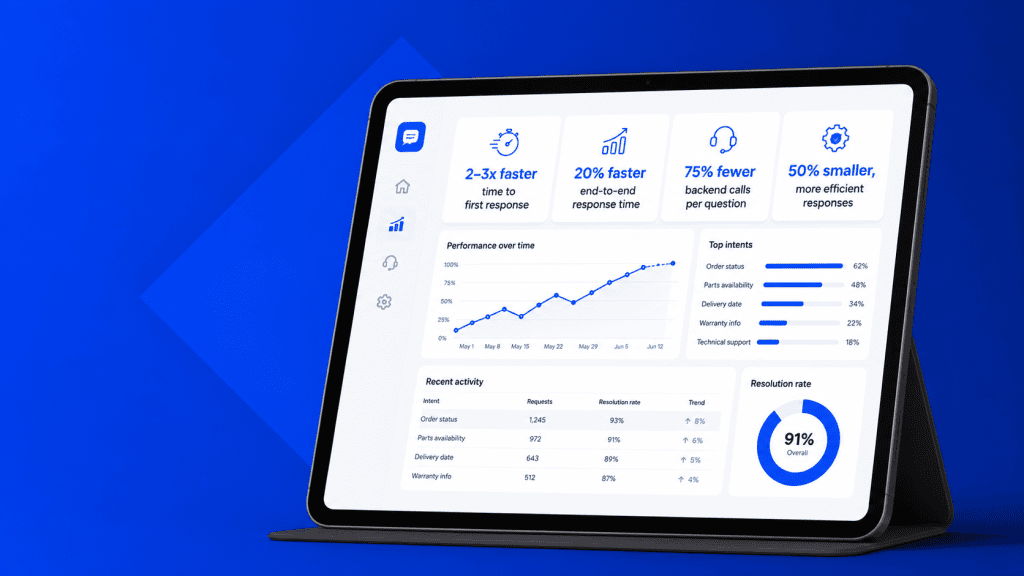
100% More Bookings: How AI Transformed Appointment Scheduling
The AI voicebot transformed an unstable product into a robust AI scheduling voicebot that responds 10x faster, uses 20x fewer tokens per…

project
Accelerating AI Strategy and Product Development
In a 3-week project, we reviewed their machine learning practices, including MLOps, to boost efficiency.

project
Exploring LLM Agents for Innovation with Tailored LLM Workshops
The workshop generated 6 actionable use cases, providing the R&D team with a solid understanding and enabling them to explore new AI…
GenAI Solution Development
project
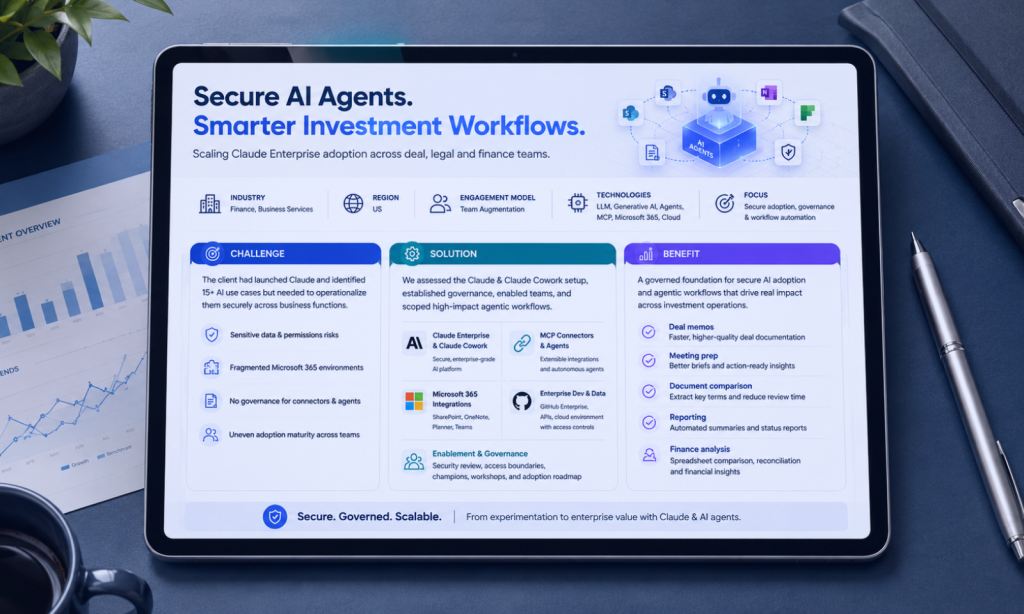
Agentic AI for Investment Workflows. Securely Scaling Claude Across Deal, Legal, and Finance Teams
We assessed the Claude Enterprise and Claude Cowork setup, reviewed security settings, access boundaries, connector risks, and configuration gaps, then created…

project
Investment Research Agent for an AI-Native Portfolio Management Platform
The scalable foundation can be extended with additional capabilities such as scenario stress testing, portfolio strategy optimization, or portfolio rebalancing.
project
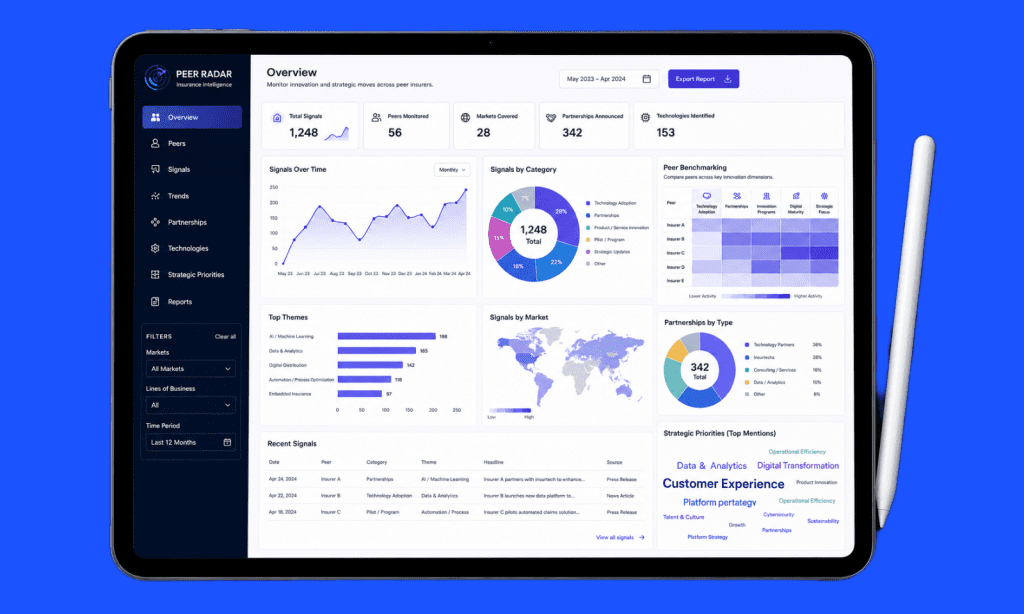
Competitive Intelligence for Structured Tracking of Insurance Innovation
Instead of manually reviewing large volumes of data sources, stakeholders could quickly identify relevant innovation signals, compare competitors across selected dimensions, and…
project
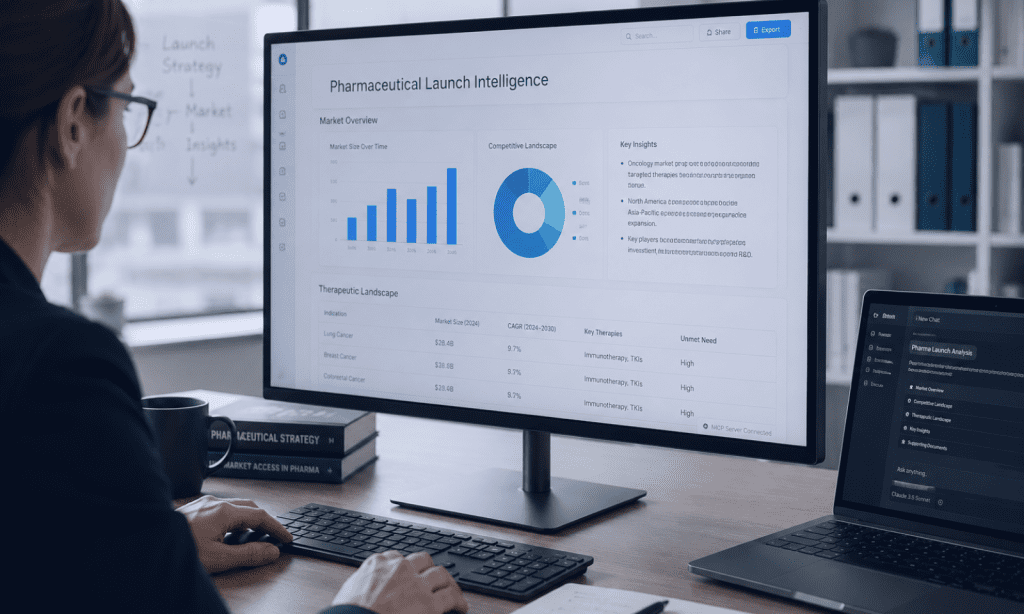
Accelerating Product Launch Research from 1-2 Weeks to 3-4 Hours
Reducing analysis preparation time from 1-2 weeks down to 3-4 hours, freeing strategists for client-facing work and enabling the organization to scale…

case-study
From 3,000+ Medical Papers to Clinical Insight. Building an AI Assistant for Physicians
An AI-powered medical research assistant deployed across 13 countries helps 2 million physicians extract insights from 3,000+ high-quality medical sources spanning…

project
Voice AI for Tier 1 Support. Automating High-Volume Telecom Operations and Cutting Costs by 30%
We built a multilingual production-grade Voice AI agent integrated with telephony (Twilio), for handling in-bound calls, and enabling real-time, human-like conversations using…


case-study
Cutting Search Time, Streamlining Ops, and Scaling Expertise with GenAI by deepsense.ai x OpenAI for Fennemore
We developed a hybrid GenAI solution powered by ChatGPT Enterprise and the OpenAI API, integrating data from SQL with unstructured content in SharePoint.

case-study
30x Faster Inference with Custom LLM SDK – Bringing GenAI to the Edge
This initiative validated that generative AI can run efficiently on edge devices, delivering cloud-level performance while improving speed, cost, and privacy.…

case-study
5x Boost in In-Silico Drug Discovery with a Multimodal LLM
The new LLM allows the client’s research team to explore molecular properties and relationships more effectively.
project
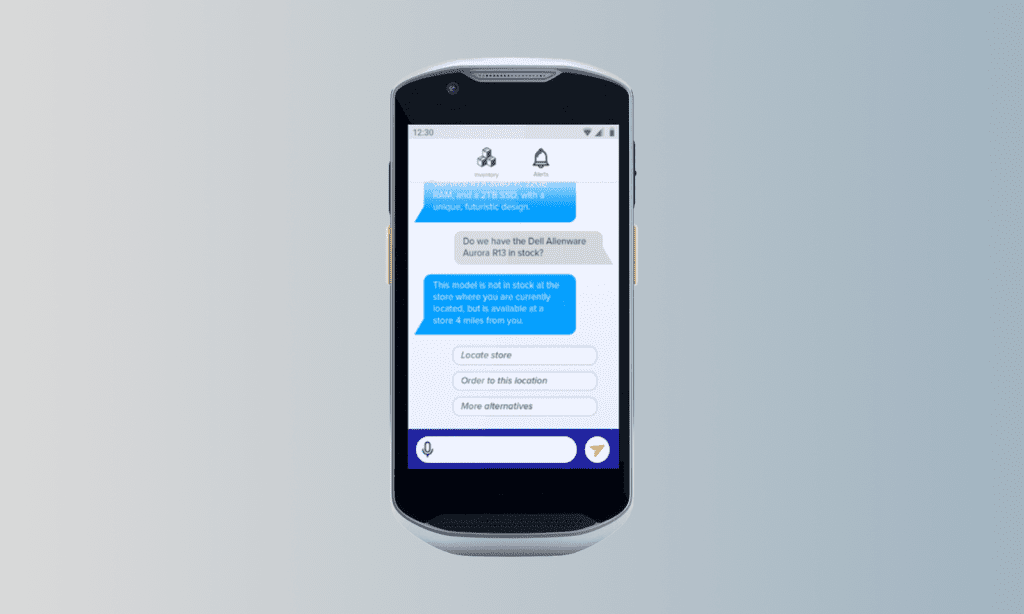
GenAI-Powered Frontline Worker Assistant
It was presented at a major retail conference in New York in 2024, demonstrating the potential of LLM applications to their customers. As a result, a pilot rollout was planned…

project
Enhancing Intent Detection with GenAI for Automated Customer Insights
The system significantly reduced manual effort, enabling the client to discover and prioritize new customer needs with greater speed and accuracy,…
GenAI Experts as Team Augmentation

project
LLM Evaluation for Document Understanding
This project eliminated guesswork, providing a clear guidance for a optimal model choice.

project
Conversational Commerce Platform for AI-Driven Personalization
Within just 6 weeks, the system demonstrated above-benchmark early-agent performance: 25% of autonomous actions were executed correctly.

case-study
Guideline-Aware Protocol Generation: How LLMs Streamlined ENCePP-Aligned Study Design for Global R&D Teams
The solution enables faster, guideline-compliant protocol creation, boosting researcher productivity and accelerating time-to-market for new therapies.

project
Revolutionizing Arthritis Trials with AI-Driven Imaging Biomarkers
The client needed a more accurate and automated solution to enable smaller, cost-efficient trials while maintaining regulatory confidence.

project
From Manuals to Answers: Fast, Accurate Tech Support via RAG-Powered Chatbot
In just 4 weeks, we delivered a pilot using ragbits, our in-house GenAI framework, to build a chatbot that answers user questions by extracting data directly…

case-study
Structured LLM Automation for Tier 1 Support — Reducing Service Ticket Volume and Third-Party Costs
The solution cut Tier 1 ticket volume and reduced reliance on vendors, lowering support costs.
case-study
Cutting Search Time, Streamlining Ops, and Scaling Expertise with GenAI by deepsense.ai x OpenAI for Fennemore
We developed a hybrid GenAI solution powered by ChatGPT Enterprise and the OpenAI API, integrating data from SQL with unstructured content in SharePoint.

project
Scaling AI Innovation for a Silicon Valley Startup with LLM Solutions
We improved reliability, established global support, and deployed advanced AI models, positioning the startup as a competitive player in the enterprise LLM space.

project
Boosting Device Performance by 10x with Edge AI and CV
The quality of results remained high, with less than 1% degradation compared to non-edge inference.

project
AI-Powered Content Quality Transformation
The AI system automated content moderation, optimized workflows, and generated high-quality data for future models, driving client’s sustained growth and…
Trusted by Technical Leaders Building AI Systems
“Their team has integrated seamlessly with our in-house teams, bringing top-tier talent and a collaborative spirit that drives innovation. We are grateful for this partnership and confident in their professionalism and expertise. “

Bill Salak

CTO & SVP Operations at Brainly

“While working with Zebra teams, deepsense.ai has consistently demonstrated a strong technical capability, coupled with a proactive approach, an unwavering commitment to quality and delivering what they promise. “

Tom Bianculli
CTO at Zebra Technologies

“Partnering with deepsense.ai has helped us accelerate our understanding of AI, implement AI solutions, and gain a strategic edge in today’s competitive landscape.”

M. Anthony Aiello
Head of Product & Innovation at AdaCore

“At Unstructured, we have been delighted to partner with deepsense.ai, a collaboration that has significantly accelerated the development across our Product Roadmap. Specializing in the complex domain of unstructured ETL for RAG, deepsense.ai has matched our technical intensity and contributed across various functional areas.”

Brian S. Raymond
Founder & CEO at Unstructured



Your Trusted AI Experts
Providing guidance and delivering tailored AI solutions that give you a competitive advantage.


Completed commercial
AI projects
World-class
AI experts

Years
of AI expertise
From Advisory to Production — Engineered for Scale and ROI
We support the full lifecycle of enterprise AI adoption: strategy, architecture, implementation, deployment, evaluation, and continuous improvement.

AI Discovery and Acceleration
We help you define and prioritize use cases, assess feasibility, evaluate risks, and turn selected opportunities into concrete solution concepts.
AI Advisory and Architecture
We review your current approach and provide practical recommendations across model choice, data architecture, RAG quality, agent design, security, evaluation, cost, and deployment.
PoC, MVP, and production implementation
We design, implement, evaluate, and deploy GenAI systems using production-grade engineering practices. We focus on the shortest credible path to measurable value, while avoiding throwaway prototypes that cannot scale.
AI Engineering Teams
For organizations that need additional AI firepower or long-term delivery support. Our engineers integrate with your teams to accelerate delivery, establish best practices, transfer knowledge, and build production systems together.
GenAI Resources for AI Leaders
Explore practical insights on RAG, AI agents, voice AI, evaluation, and production GenAI — written for teams turning AI from pilots into business systems.
-
Blog post
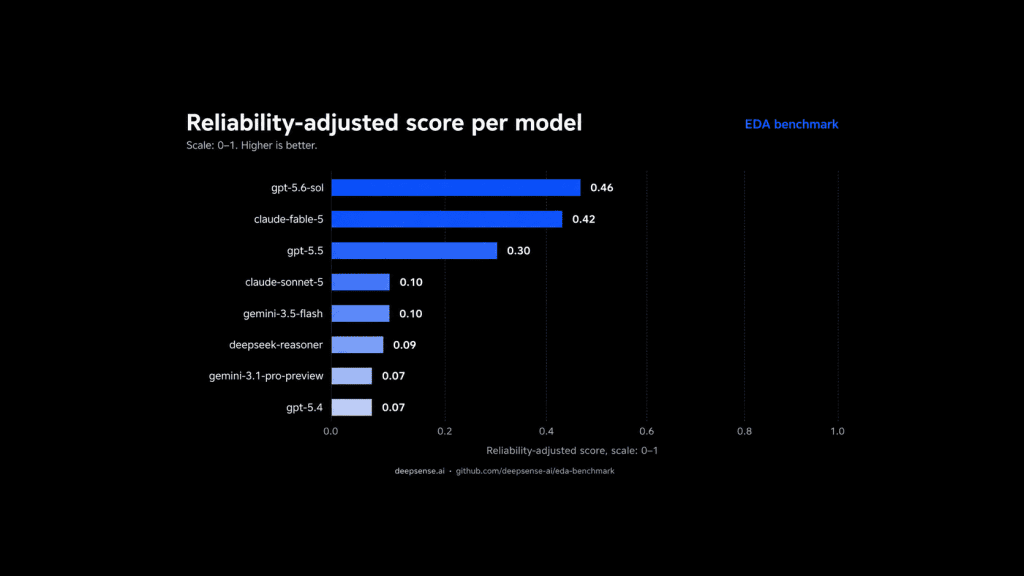
EDA Benchmark Leaderboard: July 14, 2026 Update
-
Blog post
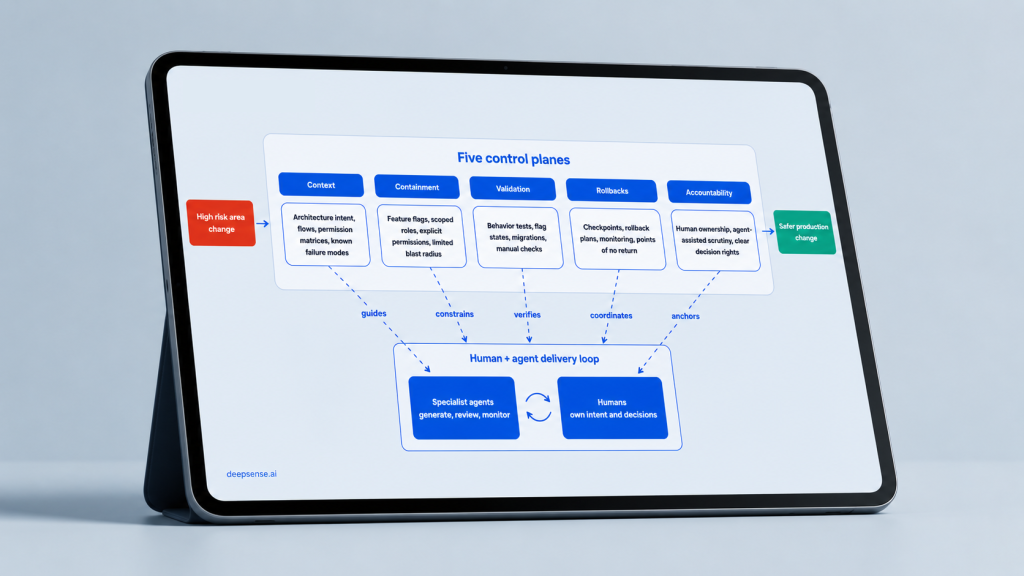
The 5 Control Planes of Agentic AI Infrastructure for Reliable Software Delivery
-
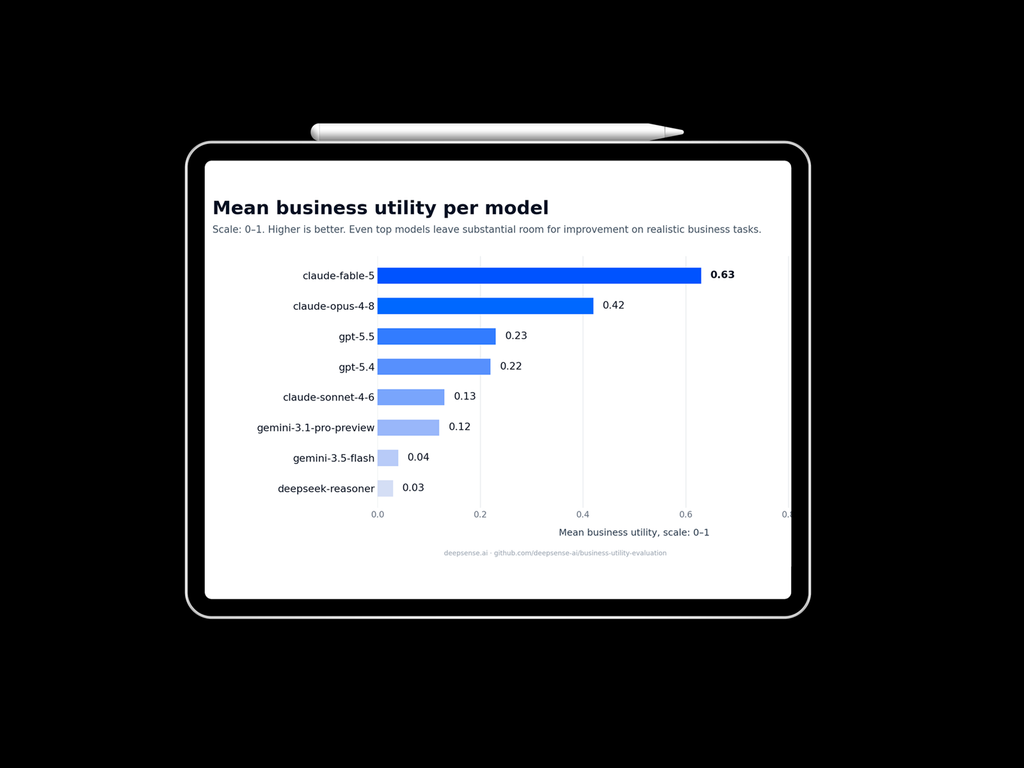
Blog post
LLM Business Utility Leaderboard: June 11, 2026 Benchmark Update
-
Academic paper
Business Utility of Large Language Models as Exploratory Data Analysis Agents
-
Webinar
AI Voice Agents & Enterprise Assistants: Lessons from Production
-
Academic paper
Improving Layout Representation Learning Across Inconsistently Annotated Datasets via Agentic Harmonization
-
Blog post
When Code Gets Cheaper, Judgment Gets More Precious: Quality Bottlenecks in Enterprise AI Systems
-

Blog post
GxP-Compliant AI Deployment. The New Competitive Edge in Life Sciences
-
Webinar
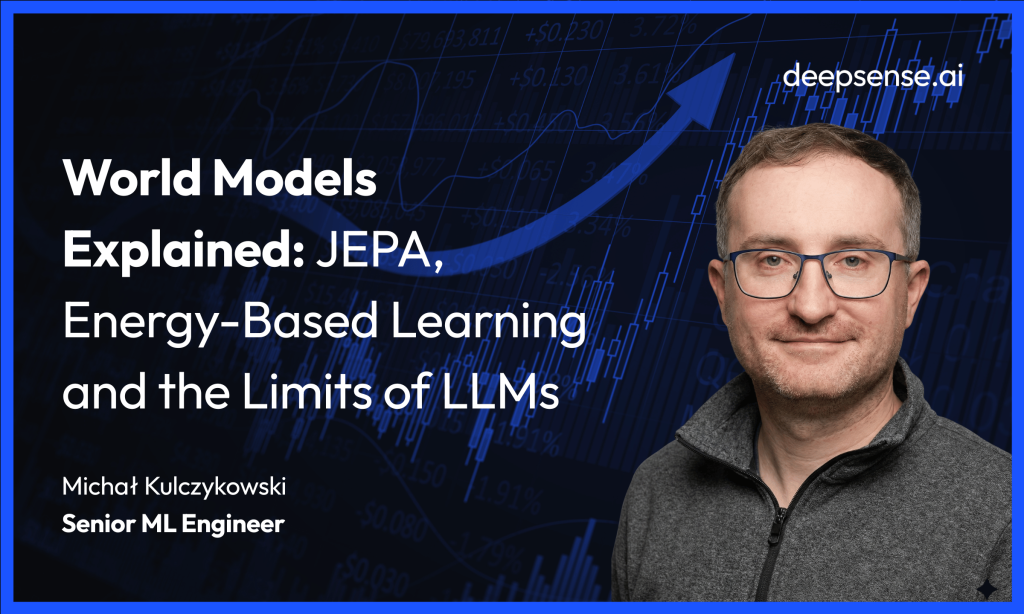
World Models Explained: JEPA, Energy-Based Learning and the Limits of LLMs
-

Ebook
What It Really Takes to Scale LLMs in 2025/26
-
Webinar
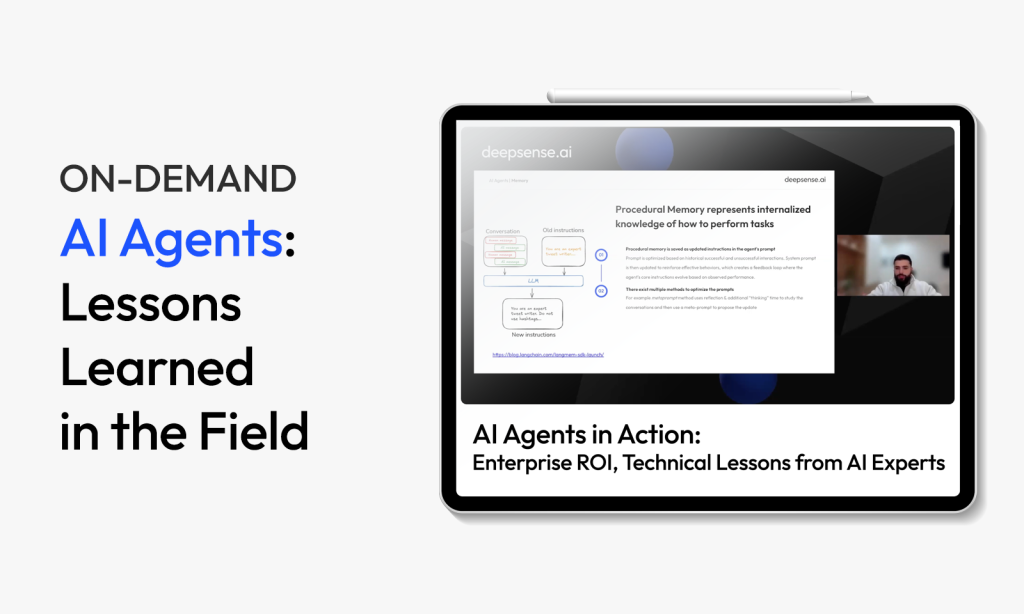
AI Agents: Lessons Learned in the Field
-

Blog post
LLM Inference Optimization: How to Speed Up, Cut Costs, and Scale AI Models
FAQ
What does deepsense.ai build in enterprise GenAI?
deepsense.ai designs, builds, and operates production-grade GenAI systems, including RAG platforms, AI agents, voice AI, evaluation frameworks, and secure enterprise integrations. The focus is on systems that deliver measurable ROI, reliability, cost control, and enterprise-grade security — not isolated demos or short-lived PoCs.
How is this different from building a chatbot or simple LLM app?
A chatbot usually answers questions. A production GenAI system connects to enterprise data, tools, workflows, permissions, monitoring, and evaluation pipelines. That means it can retrieve trusted knowledge, execute controlled actions, support users in real time, and improve safely after deployment.
What is RAG, and when should an enterprise use it?
RAG, or Retrieval-Augmented Generation, allows AI systems to answer questions using your own documents, databases, tickets, wikis, CRMs, SharePoint, and other internal sources. It is useful when teams need faster access to trusted knowledge, source-grounded answers, and AI assistants that stay aligned with current enterprise information.
What business problems can AI agents solve?
AI agents are useful when work requires multiple steps across different systems, such as checking data, updating records, generating summaries, routing cases, preparing reports, or supporting operational decisions. We build agents with tool access, orchestration, guardrails, human approval flows, tracing, and evaluation so they can operate safely in real business processes.
How do you make GenAI systems reliable enough for production?
Reliability comes from architecture, evaluation, observability, and operational controls. We test retrieval quality, response accuracy, tool use, latency, cost, failure modes, and user feedback before and after deployment, then use monitoring and feedback loops to improve the system over time.
Why is AI evaluation important?
AI evaluation helps determine whether a system works on real data, real users, edge cases, and business-critical tasks. Without evaluation, teams often overestimate demo performance and underestimate production risk. We use benchmarks, automated checks, expert review, observability, and business KPIs to make quality and ROI measurable.
Can deepsense.ai help us choose between OpenAI, Anthropic, Google Cloud, AWS, open-source models, or hybrid architectures?
Yes. deepsense.ai helps enterprises select the right models, platforms, and infrastructure based on use case, data sensitivity, latency, cost, reliability, governance, and deployment requirements. The company works with leading AI ecosystem partners, including OpenAI, Anthropic, Google, AWS, and others.
Do you support secure and compliant GenAI deployment?
Yes. We design GenAI systems with enterprise controls such as RBAC, secure data access, audit logs, tenant isolation, controlled tool execution, monitoring, and deployment options across cloud, private VPC, on-premise, and hybrid environments.
Can you help if we already have a GenAI PoC?
Yes. We often help teams assess existing PoCs, identify architecture gaps, improve retrieval or agent reliability, add evaluation and observability, optimize cost and latency, and define the path to production deployment.
Who is this service best suited for?
This is best suited for organizations that treat AI as operational infrastructure, not experimentation. The strongest fit is usually senior AI, product, technology, or transformation leaders with a clear business mandate, budget ownership, and a need to move from AI concept to production impact.
What industries does deepsense.ai work with?
deepsense.ai works with software and technology companies, pharma and healthcare organizations, financial services, telecoms and media, manufacturing, consumer goods, and other data-intensive industries where AI quality, security, and reliability matter.
How do projects usually start?
Projects usually start with discovery, technical scoping, architecture definition, or a focused PoC/MVP. Depending on the need, deepsense.ai supports AI strategy and advisory, AI product and solution development, AI engineering teams, and AI operations and deployment.
Why work with deepsense.ai instead of a generic AI consulting company?
deepsense.ai combines deep AI engineering expertise with production delivery experience. The company has 120 AI experts, 200+ commercial AI projects, 10 years of AI experience, and an NPS of 82, with a focus on delivering AI systems that are reliable, secure, and measurable in production.